Driveway Cleaning Suffolk & Nassau County, NY

Your Driveway, Restored—Not Just Rinsed

Oil stains gone. Salt damage reversed. Slippery algae eliminated. Professional driveway pressure washing that protects your investment and brings back the clean you thought was impossible.

Licensed and Fully Insured

You're protected. We're accountable. No fly-by-night crews—just a legitimate business that stands behind every job and shows up when issues arise.

Professional Grade Equipment

Commercial equipment calibrated for residential surfaces. We remove years of buildup without damaging concrete, asphalt, or pavers like inexperienced operators often do.

Experienced Cleaning Crews

Our team knows the difference between concrete and asphalt, when to pre-treat oil stains, and how to handle Long Island's unique salt damage issues.

Owner Backed Guarantee

If you're not satisfied, Niko personally makes it right. We're not interested in one-time jobs—we're building relationships with homeowners who value accountability.

Power Wash Driveway in Suffolk & Nassau County, NY

Driveway Cleaning That Actually Solves the Problem

Your driveway takes a beating. Winter salt eats away at concrete. Oil from parked cars seeps into porous surfaces. Algae turns walkways into slip hazards. A garden hose won’t fix any of that. Professional driveway pressure washing removes the contaminants that are actively shortening your driveway’s lifespan. We’re talking about the salt residue that accelerates freeze-thaw damage, the oil stains that weaken asphalt, and the organic growth that makes surfaces dangerous. This isn’t about making things look nice for a week—it’s about protecting a several-thousand-dollar investment from premature deterioration. We serve homeowners in Suffolk & Nassau County, NY who want their exterior maintenance handled by people who know what they’re doing. Licensed, insured, and equipped to handle everything from stubborn oil stains to post-winter salt damage.

Driveway Pressure Cleaning Suffolk & Nassau County, NY

What You Actually Get from Professional Cleaning

Beyond the obvious visual improvement, professional driveway cleaning delivers real, measurable protection for one of your property’s most used surfaces.

Pavement Cleaners Long Island, NY

Why Long Island Driveways Need More Than a Rinse

Long Island winters are brutal on driveways. The salt you spread to prevent ice doesn’t just melt and disappear—it penetrates porous concrete and creates calcium oxychloride crystals that expand from within, causing cracks and surface spalling. Every freeze-thaw cycle makes it worse. By spring, you’re looking at white salt stains and structural damage that a garden hose won’t touch. Then there’s the oil. Every car that parks on your driveway drips something—transmission fluid, motor oil, brake fluid. These aren’t surface stains. They penetrate deep into concrete and asphalt, weakening the binder that holds everything together. Left untreated, they create permanent dark spots and contribute to premature deterioration. Add Long Island’s humidity, and you’ve got the perfect environment for algae, mold, and mildew. These organisms don’t just look bad—they make surfaces slippery and dangerous, especially in shaded areas. They also hold moisture against your driveway, accelerating the freeze-thaw damage when winter returns. Professional driveway pressure washing addresses all of this. CPR Power Washing pre-treat oil stains with degreasers that break down petroleum products. We use the correct pressure settings for your specific surface material—because too much pressure damages concrete, and too little leaves contaminants behind. We remove the salt residue, the organic growth, and the embedded grime that’s actively destroying your driveway.

Driveway Cleaning Service Suffolk & Nassau County, NY

What's Included When We Clean Your Driveway

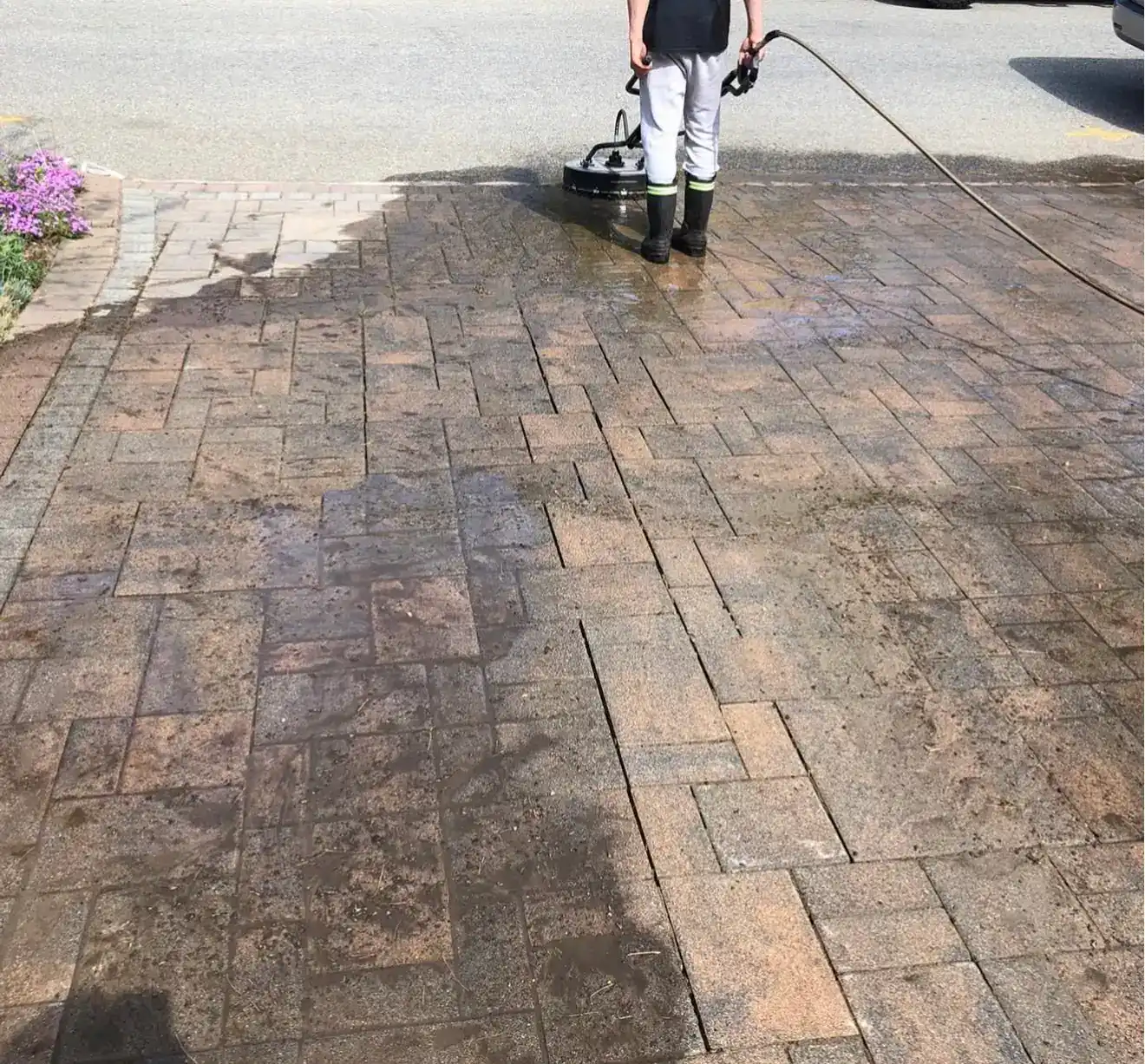
We start with a surface assessment. Concrete, asphalt, and pavers all require different approaches. We check for existing cracks, note areas with heavy staining, and identify any sections that need pre-treatment before we even turn on the pressure washer. Oil and grease stains get hit with commercial-grade degreaser first. This breaks down the petroleum products so the pressure washing can actually lift them out instead of just spreading them around. Rust stains, if you have them, get treated with specialized solutions. We’re not guessing—we’re using the products designed for specific contaminants. The actual cleaning uses professional power washing equipment with adjustable pressure. For most concrete driveways, we’re working in the 2000-3000 PSI range. Too much pressure etches the surface. Too little leaves dirt embedded. We use surface cleaner attachments for even coverage and to prevent the streaking you get from wand-only cleaning. We pay attention to edges, joints, and the areas where your driveway meets the garage or walkway. These spots collect the most grime and are usually the first places algae establishes. When we’re done, we do a final rinse to remove any cleaning solution residue, and we inspect the entire surface to make sure nothing was missed. If you’re planning to seal your driveway, this is the prep work that makes or breaks the sealant’s effectiveness. Sealing over dirt traps contaminants and shortens the sealant’s lifespan. Professional cleaning ensures you’re sealing a truly clean surface.
Driveway Cleaning FAQs

Common Questions About Our Service

For most Long Island homeowners, professional driveway cleaning once or twice a year makes sense. Spring cleaning is the most important—it removes the winter salt residue that accelerates freeze-thaw damage and allows you to spot any cracks that developed over winter before they get worse. Fall cleaning is your second priority because it removes organic matter and prepares the surface if you’re planning to seal before winter. If your driveway is under heavy tree coverage or gets a lot of vehicle traffic, you might need cleaning every three to six months. The humidity here promotes algae growth faster than drier climates, and our winters are harsh enough that salt damage is a real concern, not just cosmetic. If you’re seeing visible stains, slippery algae patches, or white salt residue, you’re overdue. The cost of cleaning is minimal compared to resurfacing or replacing a driveway that deteriorated from neglect.
Not when it’s done correctly with the right equipment and pressure settings. Concrete can typically handle 2000-3000 PSI, but the key is using a surface cleaner attachment and keeping the nozzle moving. Holding a concentrated stream in one spot or using too narrow a nozzle tip can etch concrete or create the “alligator cracking” pattern you sometimes see on driveways that were pressure washed incorrectly. Asphalt is softer and requires lower pressure, especially if it’s already showing cracks or wear. This is why professional equipment matters—we have adjustable pressure and the experience to know what each surface can handle. DIY pressure washing causes problems when homeowners rent the most powerful machine available and blast away without understanding that more pressure isn’t always better. We’ve cleaned hundreds of driveways in Suffolk and Nassau County, and we know the difference between effective cleaning and surface damage. If your driveway is already compromised with significant cracks, we’ll let you know before we start so you can make an informed decision.
Most of the time, yes—but it depends on how deep the oil penetrated and how long it’s been sitting there. Fresh oil stains are relatively easy because they haven’t fully absorbed into the concrete. Old stains that have been baking into porous concrete for years are tougher, but we pre-treat them with commercial degreasers that break down petroleum products at a molecular level. Then the pressure washing lifts out what the degreaser loosened. Some extremely old stains on unsealed concrete might not come out 100%, but we can usually get them to the point where they’re barely noticeable instead of being the first thing you see when you pull into the driveway. The key is the pre-treatment step—just hitting oil stains with water pressure alone doesn’t work. You need a degreaser that’s designed for the specific type of oil or grease. We’ve dealt with everything from transmission fluid to motor oil to the grease drippings from backyard grills, and we know which products actually work versus the ones that just claim to work.
The terms get used interchangeably, but technically power washing uses heated water while pressure washing uses regular temperature water at high pressure. For most driveway cleaning in Long Island, pressure washing is what you need. The high-pressure water combined with the right cleaning solutions handles salt stains, algae, mold, and general grime effectively. Power washing with heated water is better for extremely stubborn grease or sticky substances, but it’s overkill for typical residential driveway cleaning and can actually cause more surface damage if not handled carefully. What matters more than the water temperature is using the correct pressure for your surface material, having the right nozzles and attachments, and knowing when to pre-treat stains versus just blasting them with water. We use professional-grade equipment that gives us control over pressure, flow rate, and spray pattern—that’s what delivers results without damaging your driveway. The biggest mistake homeowners make is thinking they just need the most powerful machine they can rent, when what actually matters is technique and understanding what you’re cleaning.
If your driveway is concrete or asphalt and hasn’t been sealed in the past few years, yes—sealing after professional cleaning is one of the smartest investments you can make. Sealant creates a protective barrier that prevents water, salt, and oil from penetrating the surface, which dramatically extends the lifespan of your driveway and makes future cleaning easier. Here’s the critical part: you have to clean before you seal. Sealing over dirt, oil stains, or algae traps those contaminants under the sealant, which defeats the entire purpose and shortens how long the sealant lasts. This is why timing matters—get your driveway professionally cleaned, let it dry completely (usually 24-48 hours depending on weather), then apply sealant. For Long Island driveways, sealing in the fall makes sense because it protects against the upcoming winter’s freeze-thaw cycles and salt damage. Most sealants last two to three years before you need to reapply. We can handle the sealing as part of our service, or if you prefer to do it yourself, we’ll make sure the surface is properly prepped so the sealant bonds correctly.
We offer discounts for new customers to make it easier to try our service, and we provide ongoing discounts for military members and first responders as a way of saying thank you for what you do. The goal isn’t to be the cheapest option—it’s to make professional service accessible while still delivering the quality and accountability that comes with being licensed and insured. We’re also happy to bundle services if you need more than just driveway cleaning. A lot of our customers start with the driveway and then realize their patio needs attention, or they want the house washed, or they notice masonry repairs that should be addressed. Bundling multiple services in one visit is more efficient for everyone and typically costs less than scheduling everything separately. When you reach out for an estimate, we’ll give you honest, transparent pricing with no hidden fees. You’ll know exactly what you’re paying for and what results to expect. We’re not interested in the bait-and-switch approach some companies use where the quote is low but the final bill is mysteriously higher. What we quote is what you pay.

Surface Evaluation and Prep

We assess your driveway material, identify problem areas, and pre-treat oil stains and heavy buildup before pressure washing begins.

Professional Pressure Cleaning

Using commercial equipment with correct pressure settings, we systematically clean the entire surface, edges, and joints without causing damage.

Quality Check and Walkthrough

Final inspection ensures complete stain removal, proper rinsing, and that your driveway is ready for sealing if that's your next step.