Professional pressure washing services and more across Long Island.
Contact Info
- Roslyn Heights, NY 11577
- Call: 516-353-8711
- Text: 516-353-8711
- 24/7 - 365 Days
Professional pressure washing services and more across Long Island.
Contact Info
Your patio shouldn't look like it survived a battle. Learn how professional cleaning removes stubborn buildup and transforms neglected outdoor spaces into entertainment-ready zones.
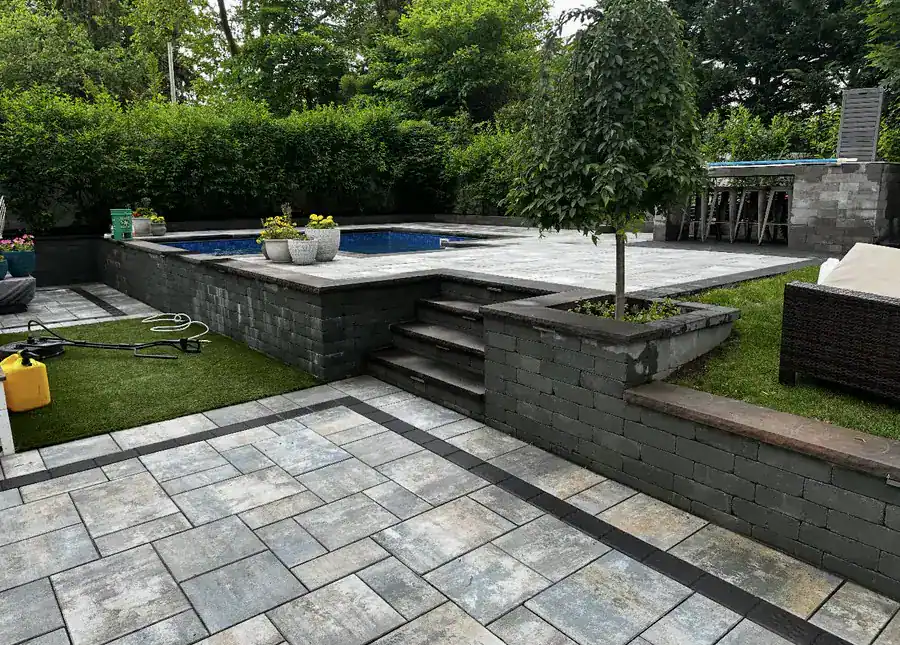
Sweeping leaves off your patio isn’t cleaning. It’s maintenance. Real patio cleaning addresses what’s happening below the surface—the organic growth working its way into porous concrete, the algae feeding on moisture trapped between pavers, the mold that’s turned your entertainment space into a safety liability.
Your patio material matters. Concrete pavers absorb moisture differently than brick. Natural stone requires gentler methods than stamped concrete. Each surface has its own vulnerabilities, especially after Long Island’s freeze-thaw cycles push water into microscopic cracks all winter long.
Professional patio cleaning Westbury isn’t about blasting everything with maximum pressure. It’s about matching the right cleaning method to your specific surface, understanding what caused the buildup in the first place, and addressing it in a way that doesn’t create new problems. That distinction separates temporary fixes from actual restoration.
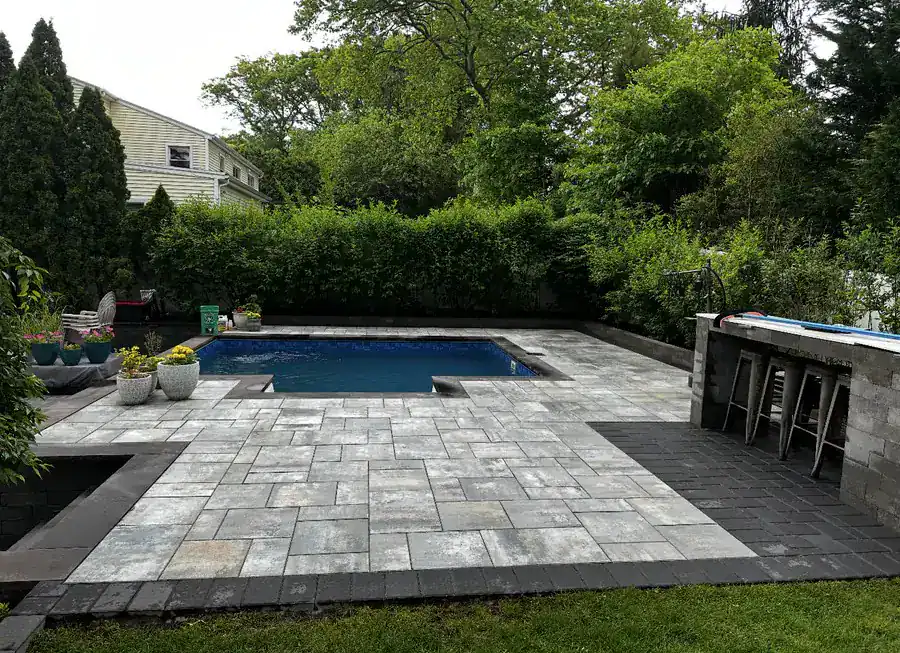
Long Island winters do specific damage. It’s not just cold—it’s the cycle. Water seeps into your patio surface during the day, freezes at night, expands, and creates tiny fractures. Do that a hundred times over four months, and you’ve got a surface that’s more porous than it was in October.
Those fractures trap moisture. When spring humidity arrives, you’ve created perfect conditions for mold and algae. Add in salt residue from de-icing products, dirt tracked from muddy lawns, and organic debris that’s been sitting wet for weeks, and you understand why your patio looks worse in April than it did in November.
The green or black streaks aren’t just ugly. They’re slippery when wet, they smell when it’s humid, and they’re actively breaking down your patio surface. Algae produces acids as it grows. Mold spreads through root-like structures that work deeper into porous materials. Every week you wait, the problem gets harder to reverse.
This is why spring patio cleaning Manhasset isn’t optional maintenance—it’s damage control. You’re not just removing stains. You’re stopping active deterioration and preventing the kind of deep-set damage that eventually requires replacement rather than restoration. The difference between a patio that lasts fifteen years versus thirty often comes down to whether someone addressed this annual buildup properly.
Suffolk County homeowners face this every spring. The coastal humidity makes it worse. Properties with tree cover see more organic growth. North-facing patios that don’t get direct sun stay damp longer. These aren’t excuses—they’re factors that determine how aggressive your cleaning approach needs to be.
Concrete patios are porous. That’s the problem and the opportunity. Porous surfaces absorb stains—oil drips from the grill, tannins from leaves, rust from metal furniture. But that same porosity means cleaning solutions can penetrate and lift stains from within the material, not just off the surface.
Brick pavers have their own issues. The bricks themselves might be fine, but the joints between them collect dirt, lose sand over time, and become highways for weed growth. You’ll also see efflorescence—that white, powdery residue that appears when water pulls salts to the surface. It’s not mold, but it looks terrible and indicates moisture problems.
Natural stone patios—bluestone, flagstone, travertine—require the gentlest approach. Too much pressure damages the surface. Harsh chemicals can etch or discolor. These materials cost more upfront, and they demand more careful maintenance. But when cleaned properly, they age beautifully rather than just looking old.
Paver patios in Nassau County, NY typically use concrete or clay pavers. The individual pieces are durable, but the system depends on proper base preparation, edge restraints, and joint sand. When you clean pavers, you’re often washing away the polymeric sand that keeps everything locked together. That’s fine—it needs replacement anyway—but it means cleaning and re-sanding go hand in hand.
Each material telegraphs problems differently. Concrete shows stains prominently. Brick develops that chalky appearance. Pavers start shifting or settling. Stone loses its color vibrancy. Knowing what you’re looking at helps you understand whether you need simple cleaning, restoration, or actual repairs.
The wrong cleaning method damages surfaces permanently. Pressure that’s too high can etch concrete, blast mortar from between bricks, or pit natural stone. Chemicals that are too acidic can discolor pavers or weaken their surface. This is why the “rent a pressure washer and figure it out” approach often creates new problems while solving old ones.
Want live answers?
Connect with a CPR Power Washing expert for fast, friendly support.
Professional patio power washing starts with assessment, not equipment. What’s the surface material? What caused the staining? Is there structural damage hiding under the grime? These questions determine everything that follows—pressure settings, cleaning solutions, whether you need surface cleaners or wands, how you’ll handle runoff.
Commercial equipment makes a difference, but it’s not just about power. It’s about control. Professional units let you adjust pressure precisely, maintain consistent temperature, and use surface cleaners that prevent the streaking you get from wand-only cleaning. They also have the flow rate to actually flush away dissolved grime instead of just moving it around.
The process typically involves pre-treating stubborn stains, applying cleaning solutions that break down organic growth, allowing dwell time for penetration, and then washing with appropriate pressure while managing water flow to prevent damage to surrounding landscaping. It’s methodical, not aggressive. Speed comes from efficiency, not from cranking everything to maximum and hoping for the best.
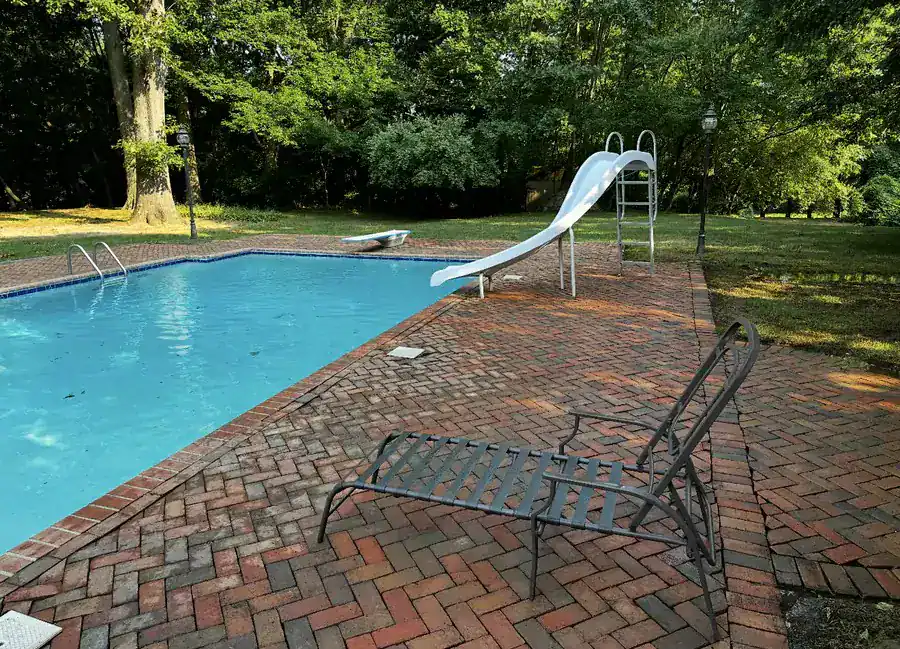
Mold and algae aren’t just surface stains. They’re living organisms with root structures that penetrate porous materials. Blasting them with water removes what you see. It doesn’t kill what’s below the surface, which is why stains often return within weeks when homeowners try DIY cleaning.
Effective removal requires biocides—cleaning solutions that actually kill the organisms. Professional-grade products penetrate deeper than hardware store sprays. They need dwell time to work, usually 10-20 minutes depending on severity. Then the pressure washing physically removes the dead growth and prevents immediate regrowth.
Shaded areas are the worst. North-facing patios, spaces under tree cover, anywhere that stays damp—these spots need more aggressive treatment and often benefit from preventive applications that inhibit future growth. You’re not just cleaning; you’re changing the environment that allowed growth in the first place.
The slippery texture you feel on affected surfaces is biofilm—a layer of living organisms plus the slime they produce. It’s legitimately dangerous when wet. People slip, kids fall, elderly relatives avoid using the patio entirely. Professional cleaning eliminates this safety hazard completely, not just temporarily.
Suffolk County’s coastal humidity means this is an annual battle. You can win it with proper cleaning and preventive measures, or you can lose ground every year until the staining becomes permanent and the surface deterioration requires replacement. Most homeowners don’t realize they’re in this fight until they’re already behind.
Your driveway faces different challenges than your patio. Vehicle traffic, oil drips, transmission fluid leaks, tire marks—these petroleum-based stains penetrate deep into concrete and asphalt. They don’t respond to the same methods that work for organic growth.
Oil stain removal on driveways requires degreasers that break down petroleum compounds. Sometimes you need poultices—absorbent materials mixed with solvents that draw stains out from within the concrete. For old, set-in stains, you might need multiple treatments. Fresh spills are easier, which is why addressing them quickly matters.
Asphalt driveway cleaning is trickier than concrete. Asphalt is softer, more easily damaged by aggressive pressure or harsh chemicals. The goal is removing stains without removing the asphalt binder that holds everything together. It requires lower pressure, wider spray patterns, and cleaning solutions formulated specifically for asphalt.
Concrete and paver driveways can handle more aggressive cleaning, but you still need to consider joint sand, edge restraints, and whether previous sealing is peeling or failing. Sometimes what looks like staining is actually old sealer breaking down. Cleaning won’t fix that—you need stripping and re-sealing.
Driveway power washing in Nassau County, NY often reveals problems homeowners didn’t know existed. Cracks hidden under dirt. Settling that’s created drainage issues. Areas where the base has eroded. These aren’t reasons to avoid cleaning—they’re reasons to clean sooner, so you can address structural problems before they become emergencies.
The connection between patio cleaning in New Hyde Park and driveway cleaning matters because they’re part of the same system. Water flows from your driveway toward your patio, or vice versa. Stains migrate. Drainage problems in one area affect the other. Bundling these services makes sense practically and economically—you’re already set up, the equipment’s there, and addressing everything at once gives you a complete picture of your exterior hardscape condition.
Your patio represents more than the money you spent installing it. It’s where you host summer barbecues, where your kids play, where you drink coffee on Saturday mornings. Letting it deteriorate because cleaning seems overwhelming or expensive is like buying a car and never changing the oil.
Professional patio cleaning Jericho isn’t an indulgence. It’s maintenance that extends the lifespan of a significant investment, prevents safety hazards, and keeps your outdoor space actually usable. The difference between a patio that looks great for 15 years versus 30 years often comes down to whether someone cleaned it properly on a regular basis.
If your patio in Suffolk County, NY or Nassau County, NY is showing signs of winter damage, organic growth, or just years of accumulated grime, you’re looking at a problem that gets worse with time, not better. We handle these situations routinely—assessing what you’re dealing with, using professional equipment and methods matched to your specific surface, and ensuring you’re not just clean today but set up for long-term success.
Summary:
Share: