Professional pressure washing services and more across Long Island.
Contact Info
- Roslyn Heights, NY 11577
- Call: 516-353-8711
- Text: 516-353-8711
- 24/7 - 365 Days
Professional pressure washing services and more across Long Island.
Contact Info
Black streaks on your Long Island roof aren't just cosmetic. Learn how soft washing protects shingles and extends your roof's lifespan.

The black streaks on your roof are Gloeocapsa magma, a blue-green algae that thrives in Long Island’s humid coastal climate. It’s not mold, dirt, or a sign your roof is defective. It’s a living organism that landed as an airborne spore and found exactly what it needed to grow.
This algae feeds on the limestone filler in asphalt shingles. As it grows, it produces a dark pigmented coating to protect itself from UV rays, which is what creates those visible streaks. The north-facing sections of your roof get hit hardest because they stay shaded and damp longer, giving algae the perfect environment.
Once it takes hold on one roof in your neighborhood, spores spread to others. That’s why you’ll often see multiple homes on the same street developing the same streaking pattern within months of each other.
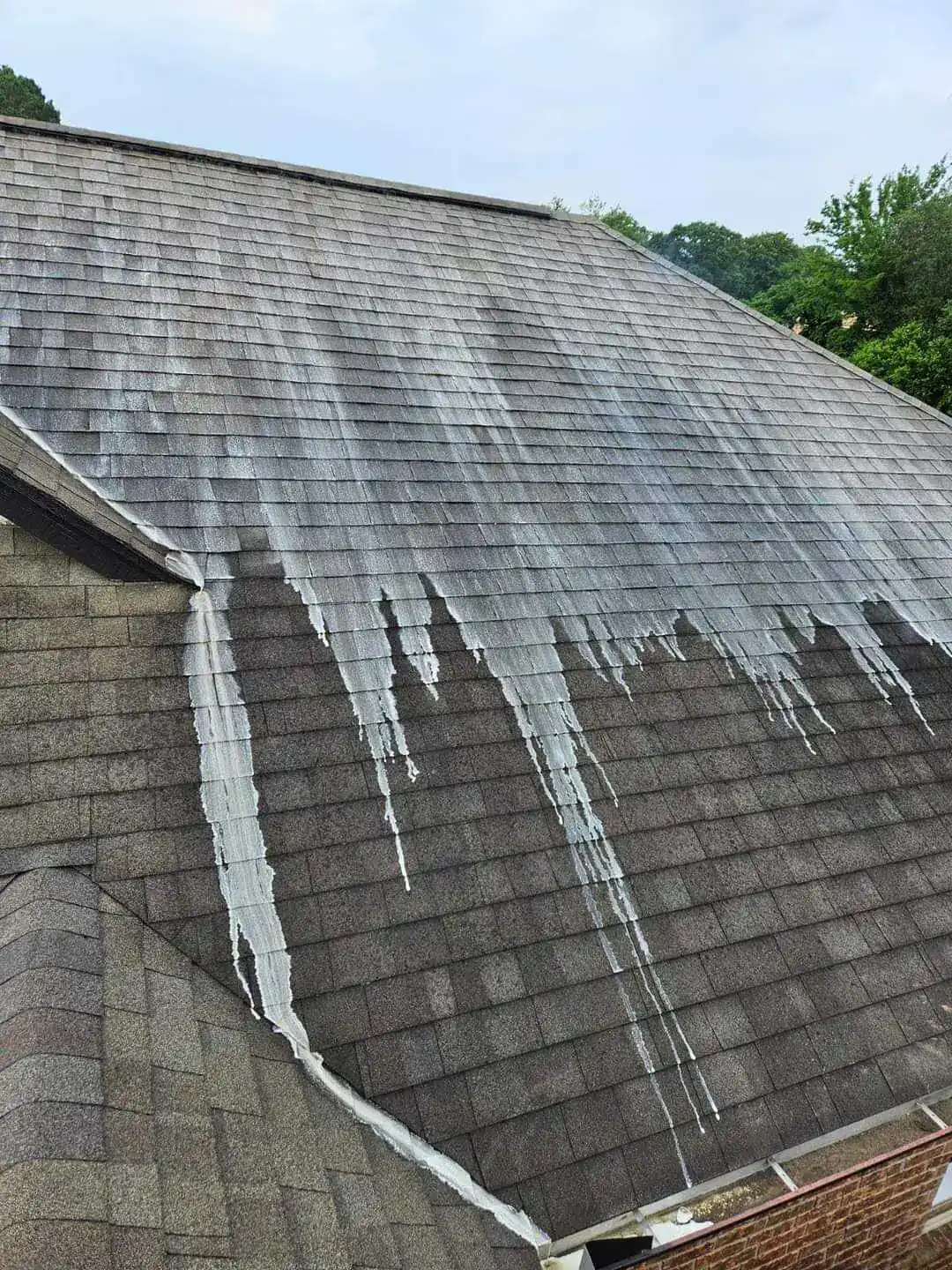
Algae doesn’t just sit on the surface. It actually consumes the limestone in your shingles, breaking down the material that gives them structure and durability. Over time, this feeding process causes granule loss, which exposes the asphalt layer underneath to direct UV damage.
Granules are your shingles’ first line of defense. They reflect sunlight, resist fire, and protect the asphalt from weathering. When algae causes those granules to come loose, your shingles become brittle and crack faster than they should. You end up with a roof that ages prematurely.
Moss is even worse. It doesn’t just feed on the shingles—it grows root-like structures called rhizoids that work their way into the granular layer and lift the edges of shingles. This creates gaps where water can seep underneath during rain or snow melt. Once water gets under your shingles, you’re dealing with potential leaks, rot in the roof deck, and moisture damage in your attic.
The longer these organisms stay on your roof, the more damage they cause. Left untreated, algae and moss can reduce your roof’s lifespan by up to 10 years. That means you could be replacing a roof at 15 years instead of 25, which is a $15,000+ expense you didn’t need to face yet.
The moisture these growths trap against your roof also prevents proper drying after storms. Long Island gets its share of rain and humidity, and when your roof can’t dry out properly, you’re creating conditions for even faster deterioration. It becomes a cycle that accelerates the aging process.
Nassau County’s location on the coast creates the perfect storm for roof algae. You’ve got humidity from the ocean, salt air that holds moisture, and enough rainfall to keep surfaces damp. Algae thrives in exactly these conditions.
The summer months bring heat and humidity that algae loves. But it’s not just summer—Long Island’s mild, wet springs and falls extend the growing season. Your roof stays damp from morning dew, afternoon showers, and the general moisture in the air. North-facing roof sections that don’t get direct sun can stay wet for hours or even days after a rain.
Trees make it worse. If you have branches hanging over your roof, they drop debris that holds moisture and provides shade. That shade keeps your roof cooler and damper, which algae prefers. The leaves and organic matter that collect in valleys and along edges create little pockets where moss can take root and spread.
Salt air from the ocean doesn’t directly cause algae, but it does contribute to the overall moisture level in the air. It also affects other parts of your home’s exterior, which is why Long Island homeowners deal with more maintenance issues than inland properties. Your roof, siding, gutters, and outdoor surfaces all face accelerated wear from the coastal environment.
Winter freeze-thaw cycles add another layer of stress. When moisture trapped by moss or algae freezes, it expands. This expansion can push shingles apart, crack the asphalt, and create openings for water infiltration. Then it thaws, contracts, and the cycle repeats. Over multiple winters, this process compounds the damage that started with simple algae growth.
Homes built in the 1950s and 1960s—which make up a large portion of Long Island’s housing stock—are especially vulnerable. These roofs have been exposed to decades of coastal weather, and if they haven’t been properly maintained, the algae and moss have had years to establish themselves. The longer you wait to address it, the harder it becomes to reverse the damage.
Want live answers?
Connect with a CPR Power Washing expert for fast, friendly support.
The method you use to clean your roof determines whether you protect it or damage it. Pressure washing seems like the obvious choice—blast away the grime and you’re done. But that approach destroys shingles and can void your warranty.
Soft washing uses low-pressure water (around 100 PSI, about the same as your garden hose) combined with specialized cleaning solutions. The chemicals do the work by killing algae, moss, and bacteria at the root. You’re not relying on force to strip away growth—you’re eliminating the organisms so they don’t come back.
Pressure washing uses 1,300 to 3,100 PSI, which is strong enough to strip the protective granules off your shingles, force water underneath the roofing material, and cause immediate damage that you might not even see right away. It’s fast, but it’s also destructive.
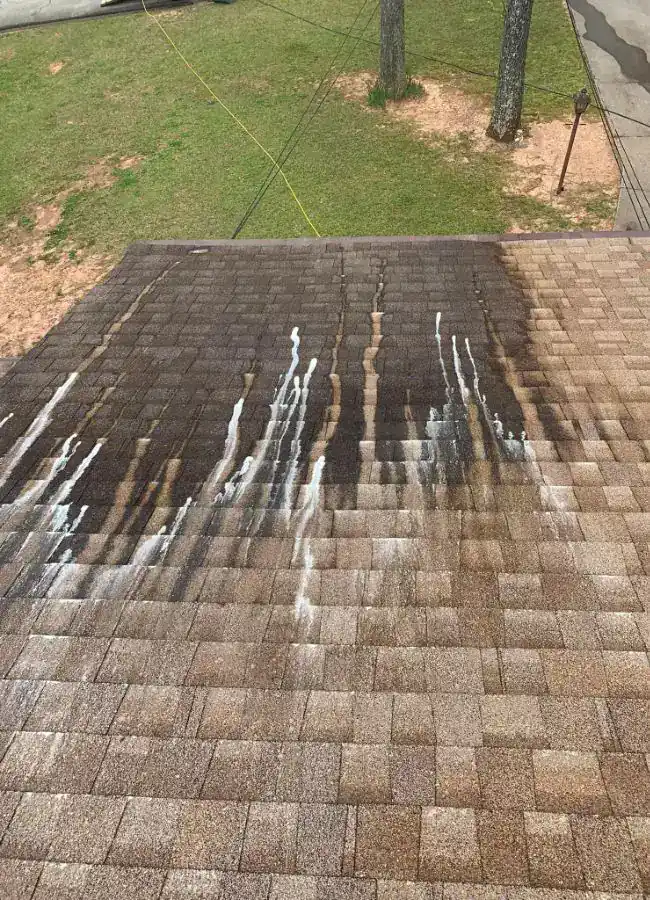
Asphalt shingles are designed with a layer of ceramic granules embedded in the surface. These granules protect the asphalt from UV rays, provide fire resistance, and give the shingle its color. They’re bonded to the asphalt, but they’re not indestructible.
When you hit shingles with high-pressure water, you’re essentially sandblasting them. The force dislodges granules and washes them away. You’ll see them in your gutters and downspouts after a pressure washing job—small, gritty particles that used to be protecting your roof.
Once those granules are gone, the asphalt underneath is exposed to direct sunlight. UV rays break down asphalt quickly, causing it to become brittle and crack. This accelerates aging and shortens the lifespan of your roof by years. You might think you’re cleaning your roof, but you’re actually making it fail faster.
Pressure washing also forces water underneath shingles. The high-pressure stream can lift shingle edges and drive water into areas it was never meant to go. This water can soak into your roof deck, cause rot, and lead to leaks that show up in your attic or ceiling. By the time you notice the leak, the damage has already been done.
Many shingle manufacturers explicitly prohibit pressure washing in their warranty terms. If you pressure wash your roof and later file a warranty claim for premature failure, they can deny it based on improper maintenance. You’ve just voided the protection you paid for when you bought those shingles.
The other issue is that pressure washing only removes the surface layer of algae. It doesn’t kill the roots or the spores embedded in the shingle pores. Within months, the algae grows back because you didn’t actually eliminate it—you just knocked off the visible part. You end up needing to clean the roof again sooner, which means more granule loss and more damage each time.
Soft washing works differently. Instead of relying on pressure, it uses biodegradable cleaning solutions that are specifically formulated to kill algae, moss, mold, and bacteria. These solutions penetrate into the pores of the shingles where the organisms are rooted and eliminate them completely.
The low pressure—around 100 PSI—is just enough to apply the solution and rinse it away gently. There’s no force stripping granules or lifting shingles. The cleaning happens chemically, not mechanically. This means your shingles stay intact and protected.
Because soft washing kills the organisms at the root, the results last significantly longer. You’re not just removing visible growth—you’re eliminating the source. Most professional soft washing treatments keep your roof clean for 1-2 years or longer, compared to pressure washing where algae can return in just a few months.
The cleaning solution also has a residual effect. After the treatment, it continues to inhibit new growth for a period of time. This gives your roof ongoing protection rather than just a one-time surface cleaning. You’re investing in prevention, not just appearance.
Soft washing is safe for all types of roofing materials—asphalt shingles, tile, wood shakes, and metal. It doesn’t cause the physical damage that pressure washing does, and it won’t void your manufacturer’s warranty. In fact, many roofing companies and manufacturers recommend soft washing as the proper maintenance method.
The process also allows for a thorough inspection while the work is being done. We can spot loose or damaged shingles, worn flashing, or early signs of leaks while we’re up there treating your roof. Catching these issues early means you can address them before they turn into expensive repairs.
By removing algae and moss without damaging your shingles, soft washing helps your roof reach its full expected lifespan. If your shingles are rated for 25 or 30 years, proper maintenance through soft washing can actually help you get those years. Pressure washing, DIY attempts, or neglecting the roof altogether almost guarantees you’ll need a replacement sooner than you should.
Your roof is one of the biggest investments in your home. Those black streaks aren’t just an eyesore—they’re actively shortening its lifespan and setting you up for expensive problems down the road.
Soft washing removes algae and moss safely, protects your shingles from damage, and extends the life of your roof by years. It reduces cooling costs by improving your roof’s ability to reflect heat, and it keeps your home looking well-maintained instead of neglected.
Choosing the right method matters. Pressure washing might seem cheaper or faster, but it causes damage that costs you more in the long run. Professional soft washing protects your investment and gives you results that actually last.
If your Nassau County, NY roof is showing black streaks or you’re noticing moss growth, it’s time to address it before the damage gets worse. We use professional soft washing techniques that protect your shingles and keep your home in top condition.
Summary:
Share: