Professional pressure washing services and more across Long Island.
Contact Info
- Roslyn Heights, NY 11577
- Call: 516-353-8711
- Text: 516-353-8711
- 24/7 - 365 Days
Professional pressure washing services and more across Long Island.
Contact Info
Most homeowners damage their siding, windows, or paint when pressure washing. This guide shows the right way to clean your Nassau County home without risking thousands in repairs.
You want your house to look clean. You don’t want to crack your siding, force water into your walls, or strip paint off your trim in the process. The problem is that most people treat pressure washing like a one-size-fits-all job. They rent a machine, crank up the PSI, and start blasting. Then they’re looking at water damage, broken window seals, or vinyl that’s warped beyond repair.
It doesn’t have to go that way. If you understand which surfaces can handle pressure and which ones can’t, you’ll save yourself a lot of money and frustration. This guide walks you through the right approach for Nassau County homes, where humid coastal air and salt exposure make exterior cleaning both necessary and tricky.
Soft washing and pressure washing are not interchangeable terms. One uses chemical cleaners and low pressure to kill organic growth at the root. The other uses high-pressure water to blast dirt off durable surfaces.
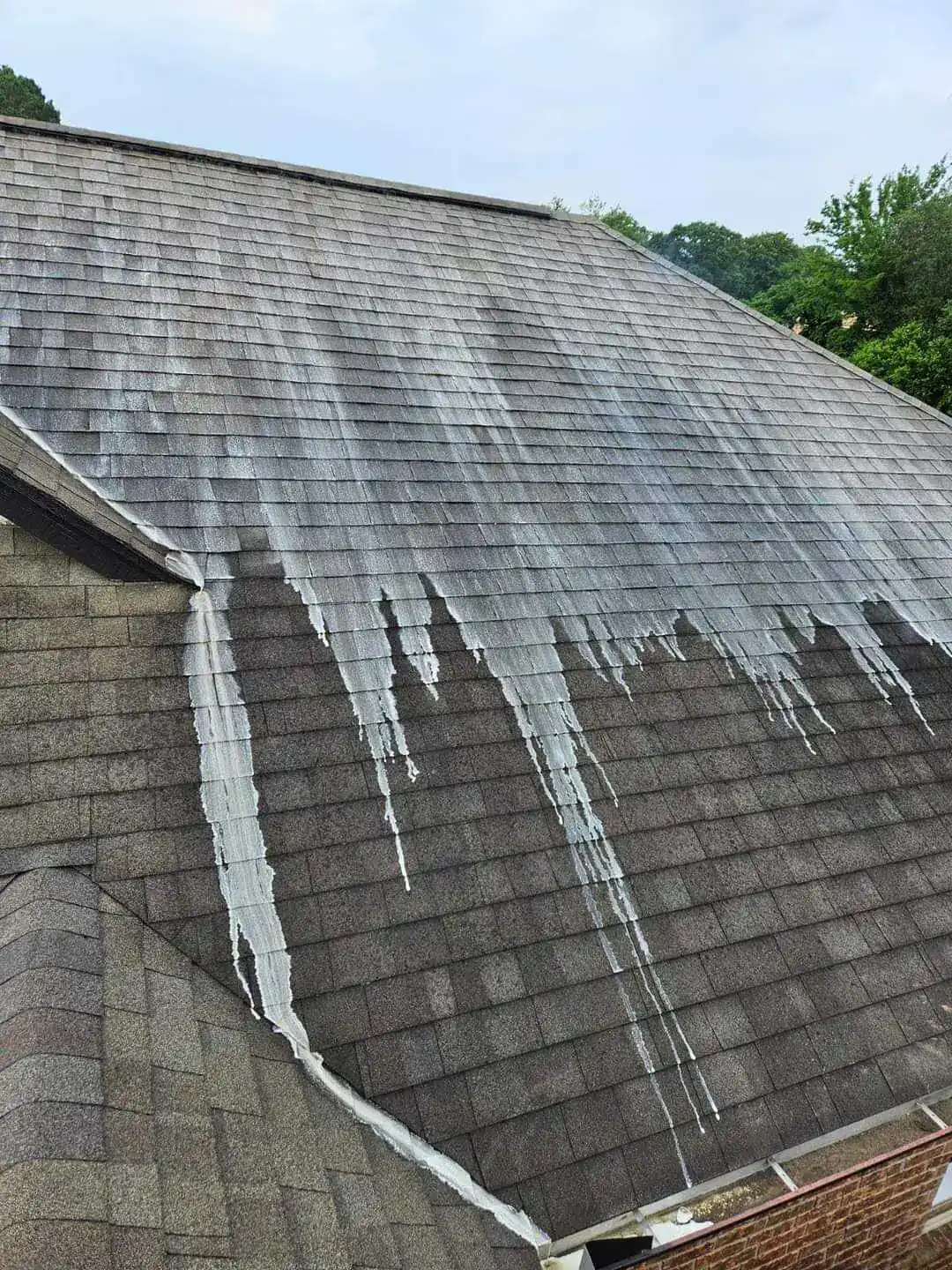
Soft washing runs at 150 to 500 PSI. That’s less force than your garden hose in some cases. It relies on biodegradable cleaning solutions that break down mold, algae, and mildew without needing brute force. This method is what you use on vinyl siding, roofs, painted wood, and anything that could be damaged by concentrated water pressure.
Pressure washing, on the other hand, operates between 1,300 and 2,800 PSI. It’s designed for concrete driveways, brick pavers, and other hard surfaces that can take the impact. When you use this level of force on delicate materials, you’re asking for trouble.

Vinyl siding is the most common exterior material on Long Island homes. It’s also one of the easiest to damage if you don’t know what you’re doing.
Here’s what happens when you hit vinyl with too much pressure. The water gets forced behind the siding panels. Once it’s back there, it soaks into your insulation, your wall cavities, and eventually your interior drywall. You won’t see the problem right away, but a few weeks later you’re dealing with mold growth inside your walls. That’s not a $200 fix. That’s a gut-and-rebuild situation that can easily hit $5,000 or more.
High pressure can also crack vinyl, especially if it’s older or sun-faded. It can strip paint off trim, damage window caulking, and break the seals on double-pane windows. Manufacturers like James Hardie and CertainTeed specifically warn against using high-pressure washing on their products because it voids warranties.
Soft washing avoids all of that. The cleaning solution does the heavy lifting by breaking down the organic material. The low-pressure rinse just washes it away without forcing water where it doesn’t belong. You get a clean house without the risk of hidden water damage or surface destruction.
This is especially important in Nassau County, where the coastal humidity and salt air accelerate mold and algae growth. You’re not just cleaning for appearance. You’re removing contaminants that break down your siding over time. Soft washing kills those organisms at the cellular level, so they don’t come back in a few weeks like they do when you just blast them off with pressure.
Not every surface on your property needs the same treatment. Knowing the difference keeps you from damaging the wrong material or wasting time on a method that won’t work.
Soft washing is the right choice for vinyl siding, wood siding, stucco, roofs, painted surfaces, and anything with caulking or seals you don’t want to compromise. These materials are porous, delicate, or coated in a way that high pressure will ruin. If you’re dealing with mold, mildew, or algae on these surfaces, soft washing is the only safe option.
Pressure washing works on concrete driveways, brick pavers, stone walkways, and unpainted masonry. These surfaces are dense enough to handle the force, and they often have embedded grime or oil stains that need that level of power to remove. Even here, you still need to be careful. Holding the nozzle too close or using too narrow of a spray angle can etch concrete or dislodge paver sand.
The biggest mistake homeowners make is assuming that more pressure equals better cleaning. It doesn’t. It just means more risk. A professional knows how to match the method to the surface. We adjust pressure settings, choose the right nozzle, and use cleaning solutions where appropriate. That’s the difference between a clean house and a damaged one.
In Nassau County, you also have to consider the regulatory side. Power washing is classified as a home improvement service under the Nassau County Administrative Code. That means contractors performing this work are required to hold a home improvement license issued by the Department of Consumer Affairs. If you’re hiring someone, ask to see their license. If they don’t have one, you’re taking on liability you don’t need.
Want live answers?
Connect with a CPR Power Washing expert for fast, friendly support.
Water infiltration is the silent killer when it comes to exterior cleaning. You won’t notice it during the wash. You’ll notice it months later when you see mold stains on your interior walls or smell mildew in rooms that shouldn’t be damp.
Siding is designed to shed water that hits it from the outside. It’s not designed to handle water being forced behind it under pressure. When you aim a pressure washer at vinyl or wood siding and hold it at the wrong angle, you’re essentially injecting water into your wall system. That water has nowhere to go, so it sits there and creates the perfect environment for mold and rot.
The safe way to clean siding is to use low pressure and work from the top down. You never spray upward into the seams. You never hold the nozzle close enough that the water stream concentrates into a single point. And you never use a narrow spray tip on siding, period.
The first mistake is renting a pressure washer and assuming you’ll figure it out as you go. Rental equipment is often set to a default PSI that’s too high for residential siding. Most homeowners don’t know how to adjust it, so they just start washing and hope for the best.
The second mistake is using the wrong nozzle. A zero-degree nozzle concentrates all the water pressure into a pinpoint stream. That’s enough force to cut through wood, strip paint, and punch holes in vinyl. Even a 15-degree nozzle can be too aggressive for siding. You want a 25- or 40-degree nozzle that spreads the water out and reduces the concentrated impact.
The third mistake is ignoring prep work. If you don’t inspect your siding before you start washing, you won’t know where the cracks, gaps, or loose panels are. Those are the spots where water is most likely to get behind the siding and cause problems. We walk the property first, identify vulnerable areas, and either repair them or avoid hitting them with direct spray.
The fourth mistake is skipping the cleaning solution. Water alone doesn’t kill mold or algae. It just moves it around. If you don’t use a proper cleaning agent, the growth comes back in a matter of weeks. Then you’re washing again, which means more wear on your siding and more chances for something to go wrong.
The fifth mistake is trying to reach second-story siding from the ground by spraying upward. This is one of the fastest ways to force water behind your siding. It also means you’re not getting a consistent clean because you can’t control the angle or distance. If you can’t reach it safely from a ladder or with an extension wand, you shouldn’t be doing it yourself.
These mistakes are common, and they’re expensive. Water damage from improper washing can easily run $3,000 to $7,000 once you factor in mold remediation, insulation replacement, and drywall repair. That’s a lot more than the cost of hiring someone who knows what they’re doing.
Long Island’s coastal location creates a perfect storm for exterior grime. The humidity from the Atlantic Ocean and Long Island Sound keeps surfaces damp longer after rain. Salt air deposits nutrients that feed algae and mildew. Mature trees create shade that traps moisture against your siding. And the seasonal temperature swings mean you’re dealing with freeze-thaw cycles that stress your exterior materials.
All of this adds up to faster organic growth on your home. If you live in Nassau County, you’ve probably noticed green streaks on your north-facing walls, black stains on your roof, or slimy buildup on shaded areas. That’s not dirt. That’s living organisms breaking down your siding, paint, and roofing materials.
Low-pressure house washing addresses this without causing the damage that high-pressure methods do. The cleaning solution penetrates the biofilm where mold and algae thrive, killing them at the root. The low-pressure rinse removes the dead material without forcing water into places it shouldn’t go.
This method also lasts longer. When you just blast growth off with high pressure, you’re not killing it. You’re relocating it. Within a few weeks, it starts growing back. Soft washing actually treats the problem, so your house stays cleaner for months instead of weeks.
For homeowners in areas like Roslyn Heights, Manhasset, Port Washington, and other Nassau County communities, this is the difference between annual maintenance and constant frustration. You’re not fighting the climate. You’re working with a method that’s designed for it.
Windows are often overlooked during exterior cleaning, but they’re one of the first things people notice when they look at your home. Streaky, grimy windows make even a freshly washed house look neglected.
The challenge with windows is that they require a completely different approach than siding. You can’t use the same pressure or cleaning solutions. High pressure will crack glass, damage window seals, and force water into the frame where it can cause rot. Even moderate pressure can strip the finish off window trim or push water past the weatherstripping.
Professional exterior window cleaning uses low pressure and specialized cleaning agents that don’t leave streaks or residue. The process starts with a gentle rinse to remove loose dirt, followed by a cleaning solution that breaks down grime without damaging the glass or frame. The final rinse uses purified water that dries without spots.
Summary:
Share: