Professional pressure washing services and more across Long Island.
Contact Info
- Roslyn Heights, NY 11577
- Call: 516-353-8711
- Text: 516-353-8711
- 24/7 - 365 Days
Professional pressure washing services and more across Long Island.
Contact Info
Choosing between soft washing and pressure washing determines whether your home gets clean or gets damaged. Here's what Nassau County homeowners need to know before anyone touches their siding.
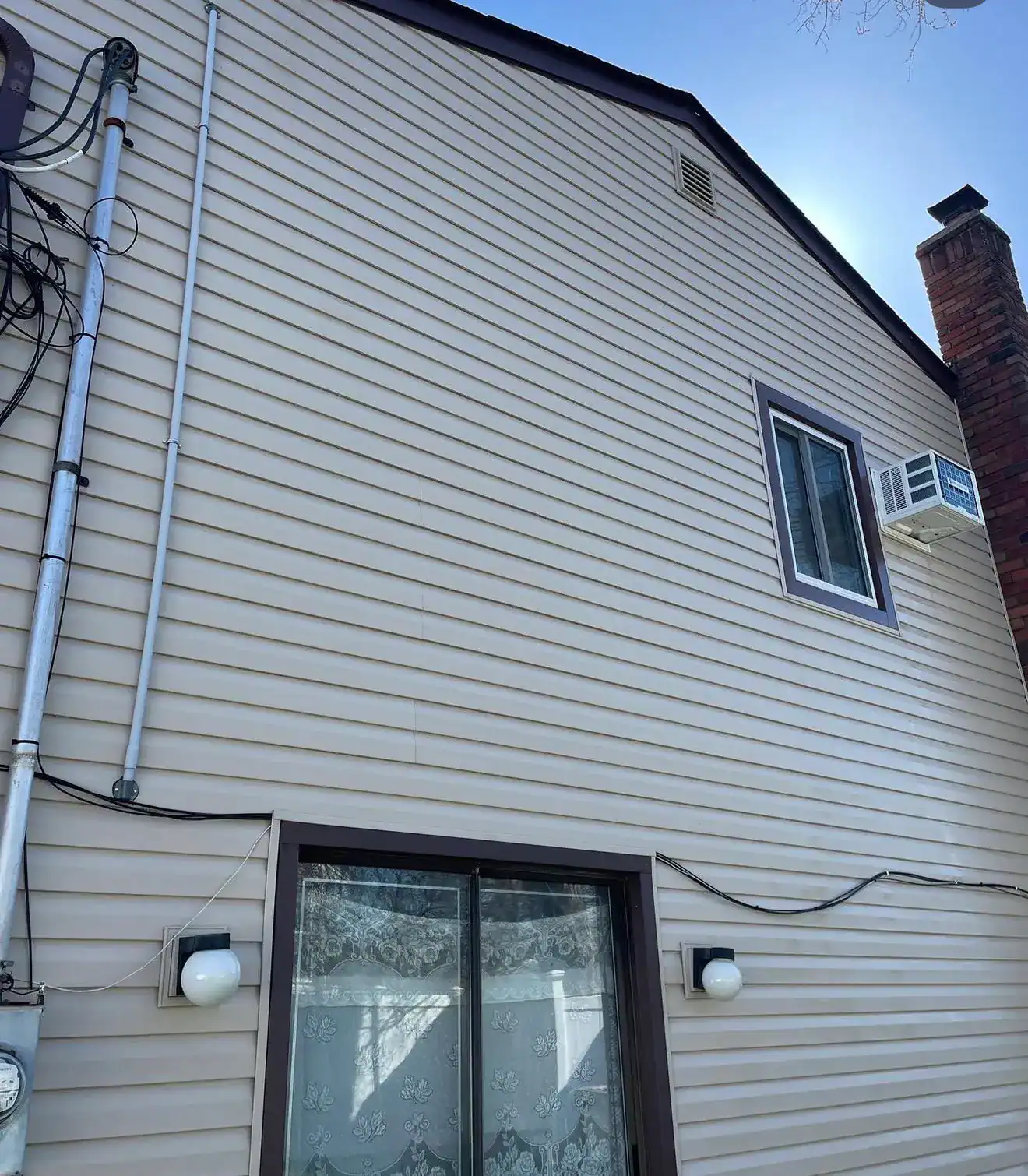
Your home’s exterior is overdue for cleaning. You’ve noticed the dark streaks on your siding, the green film creeping across your driveway, maybe some discoloration on your roof. The question isn’t whether you need cleaning—it’s how to get it done without causing damage that costs more than the cleaning itself.
Here’s what matters: the method used on your surfaces determines whether you end up with a clean home or expensive repairs. Soft washing and pressure washing aren’t interchangeable options. They’re completely different approaches designed for different surfaces, and using the wrong one can crack siding, force water into your walls, strip paint, or damage materials that can’t handle high pressure.
This isn’t about picking the “better” method. It’s about understanding which technique protects your specific surfaces while delivering the results you’re paying for.
The terms get thrown around like they mean the same thing. They don’t. Soft washing uses low pressure—typically between 150 and 300 PSI—combined with biodegradable cleaning solutions that break down organic growth at the molecular level. The chemicals do the heavy lifting. The water just rinses away what’s already been killed and loosened.
Pressure washing relies on force. Water shoots out at anywhere from 1,300 to 3,100 PSI, depending on the machine and settings. Some commercial units push past 4,000 PSI. That’s roughly the same pressure you’d get if you balanced a Honda Civic on a quarter. The spray physically blasts away dirt, grime, and anything else in its path—including paint, mortar, and surface layers if you’re not careful.
Both methods clean. But they work in fundamentally different ways, and that difference determines which surfaces they’re safe to use on.
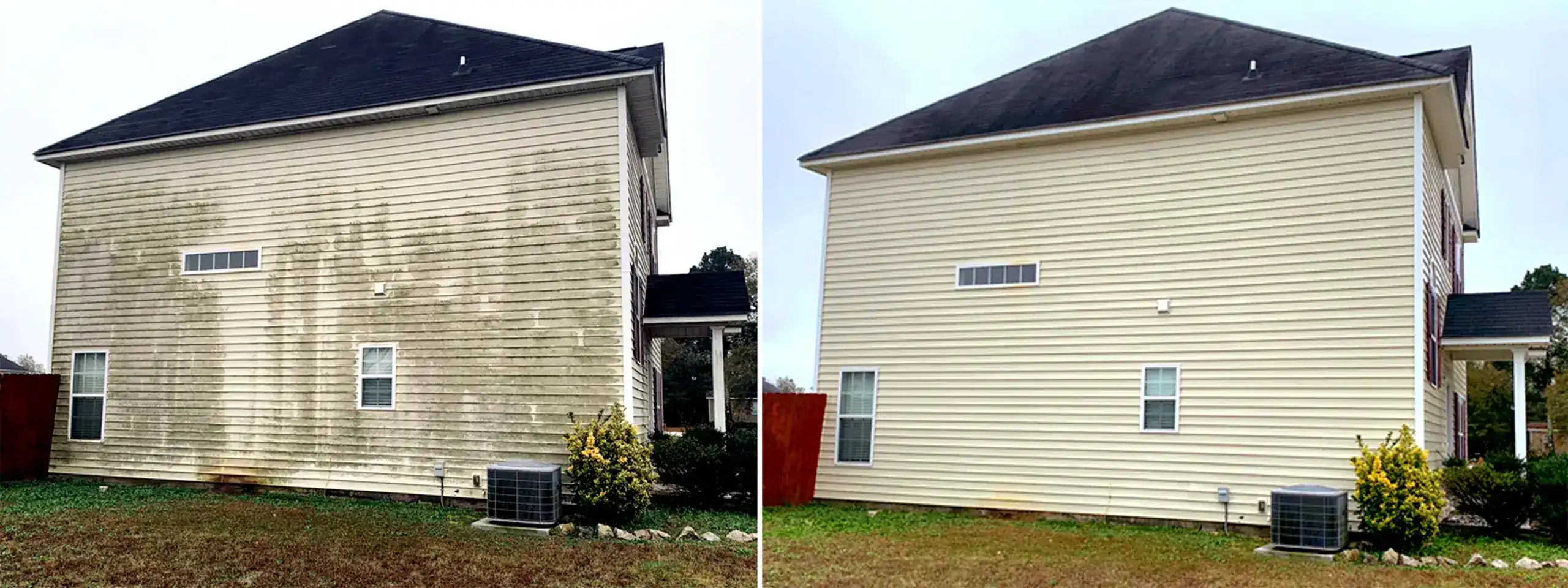
Soft washing exists because high pressure destroys certain materials. Your roof shingles weren’t designed to withstand a 3,000 PSI blast. Neither was your vinyl siding, your painted trim, or your wood deck. These surfaces need cleaning, but they need it done without the force that strips protective granules, cracks vinyl, or drives water into places it shouldn’t go.
The process starts with applying a cleaning solution formulated to kill mold, algae, mildew, and bacteria. These solutions penetrate porous surfaces and break down organic growth at the root level. You’re not just washing off the visible layer—you’re eliminating what’s underneath and preventing it from growing back as quickly.
After the solution sits for the appropriate dwell time, a gentle rinse washes everything away. The pressure is low enough that it won’t damage delicate materials, but the cleaning is thorough because the chemicals have already done the work. This approach is particularly important in Nassau County, NY, where coastal humidity creates constant moisture conditions that encourage biological growth on north-facing walls, shaded areas, and anywhere that doesn’t get direct sun to dry things out.
Soft washing works on vinyl siding, stucco, painted wood, roof shingles, composite decking, and any surface where high pressure would cause cracking, warping, or water infiltration. It’s not the faster option, but it’s the one that protects your investment while removing the grime that’s breaking down your exterior surfaces.
The cleaning solutions we use in professional soft washing are biodegradable and safe for surrounding landscaping when applied correctly. They’re designed to kill organic growth without harming plants, pets, or the environment. That’s a significant consideration when you’re dealing with runoff that flows into your yard, garden beds, or storm drains.
One thing homeowners often miss: soft washing delivers longer-lasting results than pressure washing alone. Because the cleaning solutions kill growth at the source rather than just blasting it off the surface, you get more time before you need another cleaning. The algae and mold aren’t just hidden—they’re actually dead.
Some surfaces can handle high pressure. More than that—they need it. Concrete driveways, brick pavers, stone walkways, and unsealed concrete all have deep pores that trap dirt, oil stains, tire marks, and years of embedded grime. Low pressure won’t pull that buildup out. You need force to reach into those pores and flush out what’s stuck there.
Pressure washing excels on hard, durable surfaces that won’t crack, warp, or absorb water in ways that cause problems. It’s the method for cleaning garage floors, concrete patios, paver driveways, and exterior stonework. These materials were built to withstand weather, foot traffic, and vehicle weight. They can handle the pressure required to restore them to a clean state.
The key is matching the pressure to the surface. Even within the category of “hard surfaces,” there’s variation. Older brick and mortar might need lower pressure than modern pavers. Decorative concrete with a sealed finish requires different settings than raw concrete. Professional equipment allows for pressure adjustments, nozzle changes, and technique modifications that account for these differences.
Distance matters as much as pressure. Holding the wand too close concentrates the force in a way that can etch concrete, remove joint sand from pavers, or blast away the surface layer of softer stone. Too far away and you’re wasting time without achieving effective cleaning. The right distance—typically 6 to 12 inches depending on pressure and surface—delivers cleaning power without causing damage.
Pressure washing also plays a role in surface preparation. If you’re planning to repaint, reseal, or apply protective coatings, pressure washing removes the old layers and creates a clean surface for new materials to bond to. This is different from maintenance cleaning. It’s intentional removal, done with full understanding of what’s being stripped away and why.
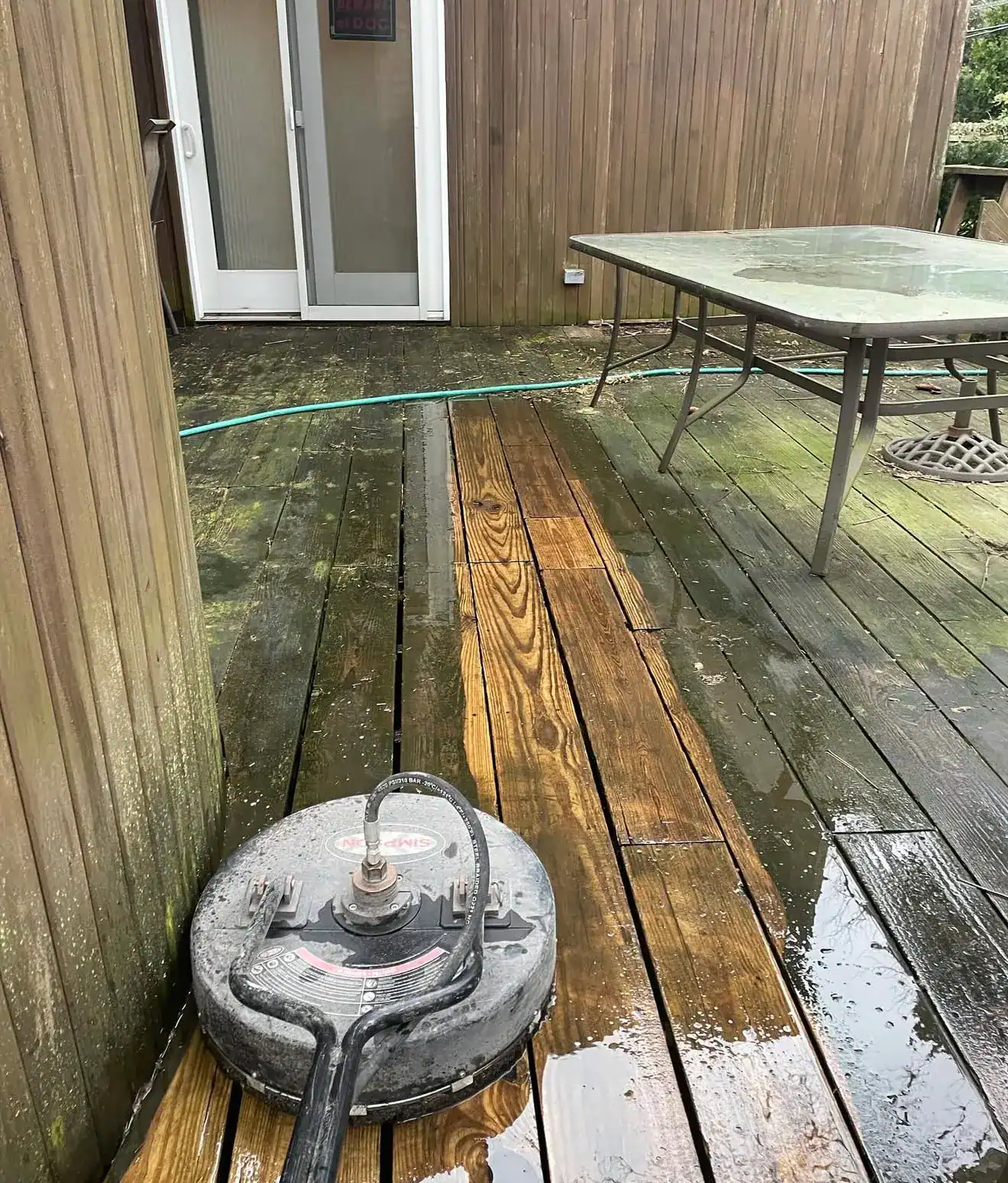
One area where pressure washing gets misused: homeowners assume that because their deck or fence is made of wood, it can handle the same pressure as their driveway. It can’t. Wood is porous and fibrous. High pressure splinters it, raises the grain, and creates a rough surface that looks worse than before cleaning. Even pressure-treated lumber has limits. If wood needs deep cleaning, it typically needs soft washing or carefully controlled low-pressure washing with wood-safe solutions.
The bottom line: pressure washing is a powerful tool for the right surfaces. Used correctly on appropriate materials, it delivers results that low-pressure methods can’t match. Used incorrectly or on the wrong surfaces, it causes damage that ranges from cosmetic to structural.
Want live answers?
Connect with a CPR Power Washing expert for fast, friendly support.
Pressure washing damage isn’t always obvious when it happens. Water forced behind your siding doesn’t announce itself with a loud crack. It seeps in quietly, sits against your sheathing, and creates conditions for mold growth that you won’t notice until you smell it or see it bleeding through your interior walls weeks or months later.
The most common damage comes from using too much pressure on materials that can’t handle it, or from directing spray at angles that force water into gaps, seams, and openings that are meant to channel water out, not let it in. Your home’s exterior is designed to shed water that falls on it from rain. It’s not designed to withstand water being driven horizontally at thousands of PSI into every crack and crevice.
Understanding what can go wrong is the first step in preventing it. The second step is knowing which surfaces require which approach, and making sure whoever touches your property has both the knowledge and the equipment to match technique to material.

Vinyl siding damage ranks among the most frequent pressure washing mistakes. Vinyl is designed to overlap in a way that allows water to drain down and out. When you spray upward into those overlaps, or hit them from the side with high pressure, water gets forced behind the siding. Once it’s back there, it has nowhere to go. It sits against your house wrap or sheathing, creating moisture conditions that lead to mold, rot, and insulation damage.
The siding itself can crack, warp, or pull away from the house under high pressure. Vinyl becomes brittle in cold weather and more pliable in heat, but neither condition makes it capable of withstanding a direct blast from a pressure washer set too high. You might not see the damage immediately—cracks can be hairline thin at first—but they’ll expand over time and create entry points for moisture and pests.
Window damage is another common issue. The seals around your windows are designed to keep water out during rainstorms. They’re not designed to resist concentrated pressure from a few inches away. High-pressure spray can break those seals, allowing water to infiltrate the space between panes in double-pane windows, or to seep into the wall cavity around the window frame. You’ll end up with foggy windows that can’t be cleaned, or with water stains and mold growth around your window trim.
Painted surfaces present their own challenges. If your paint is already showing signs of age—peeling, cracking, or lifting—pressure washing will accelerate that deterioration. The spray gets under the loose edges and peels back entire sections. Even paint in good condition can be stripped away if the pressure is too high or the nozzle is too close. This is particularly problematic with older homes in areas like Roslyn Heights, Manhasset, and Port Washington that may have multiple layers of paint, some of which could contain lead.
Mortar damage affects homes with brick or stone exteriors. Older mortar—anything more than a few decades old—is softer than modern formulations. Pressure washing can literally blast it out from between bricks, leaving gaps that compromise the structural integrity of the wall and create pathways for water infiltration. Repointing an entire brick facade can cost $5,000 to $15,000 or more, far exceeding the cost of hiring someone who knows how to clean brick without destroying the mortar.
Wood surfaces—decks, fences, siding—suffer from splintering and grain raising when hit with high pressure. The force tears away the soft wood between the harder grain lines, creating a rough, fuzzy surface that holds moisture and deteriorates faster than smooth wood. It also makes the wood difficult to stain or seal properly, since the raised grain prevents even coverage.
Roof damage from pressure washing is particularly insidious because you often can’t see it from the ground. Asphalt shingles have protective granules embedded in their surface. These granules shield the underlying material from UV damage and weathering. Pressure washing strips away those granules, dramatically reducing the lifespan of your roof. You might not notice the damage until your roof starts leaking or until you need a replacement years earlier than expected.
Thousands of people end up in emergency rooms every year because of pressure washer injuries. The high-pressure stream can penetrate skin, causing deep-tissue damage that looks minor on the surface but creates serious infection risk. The force can also propel debris—bits of paint, concrete chips, dirt—at velocities that turn them into projectiles capable of causing eye injuries or lacerations.
Professional power washing companies follow safety protocols that account for these risks. We wear protective equipment including safety glasses or face shields, closed-toe boots with slip-resistant soles, waterproof gloves, and protective clothing. We’re trained to maintain safe distances from the surface being cleaned, to never point the spray at ourselves or others, and to be constantly aware of where the wand is aimed and who might be in the area.
Equipment safety extends beyond personal protection. Electric pressure washers require ground-fault circuit interrupter (GFCI) outlets to prevent electrocution if water contacts electrical components. Extension cords must be rated for outdoor, wet conditions, and connections must be kept away from standing water and runoff. Gas-powered units create carbon monoxide risk and should never be used in enclosed or poorly ventilated spaces.
Ladder safety becomes critical when cleaning second stories or roofs. The kickback from a pressure washer can throw an operator off balance. We use proper ladder techniques, secure footing, and often use extension wands from ground level rather than working from ladders whenever possible. The risk of a fall that results in serious injury or death isn’t worth the convenience of getting a few feet closer to the surface being cleaned.
Chemical safety matters in soft washing applications. While the solutions we use are biodegradable and environmentally safe when properly diluted and applied, they still require careful handling. We understand proper mixing ratios, dwell times, and rinsing protocols. We protect surrounding landscaping by pre-wetting plants and ensuring thorough rinsing after cleaning. We also know which chemicals are compatible with which surfaces and equipment components, avoiding corrosion and material damage.
Surface preparation is part of our safety protocol. Before any cleaning begins, the area needs to be cleared of furniture, planters, grills, and anything else that could be damaged by spray or that could create a tripping hazard. Windows and doors should be closed. Electrical fixtures, outdoor outlets, and meters need to be identified and avoided. Landscaping that can’t be moved should be covered or protected.
Our professional approach also includes surface testing. Before applying full pressure or chemical solutions to an entire area, we test a small, inconspicuous spot to verify that the chosen method and settings won’t cause damage. This is basic risk management that protects both your property and our team.
As a licensed and insured contractor, we carry liability coverage that protects homeowners if something does go wrong. We also carry workers’ compensation insurance so that if a technician is injured on your property, you’re not facing a lawsuit. These aren’t optional extras—they’re fundamental requirements for anyone doing this work professionally. Asking to see proof of insurance before work begins is standard practice, and any contractor who hesitates to provide it is one you should avoid.
The difference between soft washing and pressure washing isn’t about which method is better. It’s about which method is right for the specific surfaces you’re cleaning. Your vinyl siding needs soft washing. Your concrete driveway needs pressure washing. Your roof shingles need soft washing. Your brick pavers can handle pressure washing, but your painted wood trim can’t.
Getting this right means your home gets clean without getting damaged. Getting it wrong means you’re looking at repairs that cost more than the cleaning, or dealing with mold growth and water damage that shows up after the contractor is long gone. Nassau County’s coastal climate doesn’t give you room for error—the humidity and salt air from Long Island Sound already create enough challenges without adding water infiltration from improper washing techniques.
If you’re looking for exterior cleaning that’s done right the first time, with the proper equipment and technique for each surface on your property, we bring the experience and accountability that protects your investment while delivering the results you need.
Summary:
Share: