Professional pressure washing services and more across Long Island.
Contact Info
- Roslyn Heights, NY 11577
- Call: 516-353-8711
- Text: 516-353-8711
- 24/7 - 365 Days
Professional pressure washing services and more across Long Island.
Contact Info
One wrong move with a power washer can turn your weekend project into a $2,000 repair bill. Here's what Nassau County homeowners need to know before cleaning their deck.
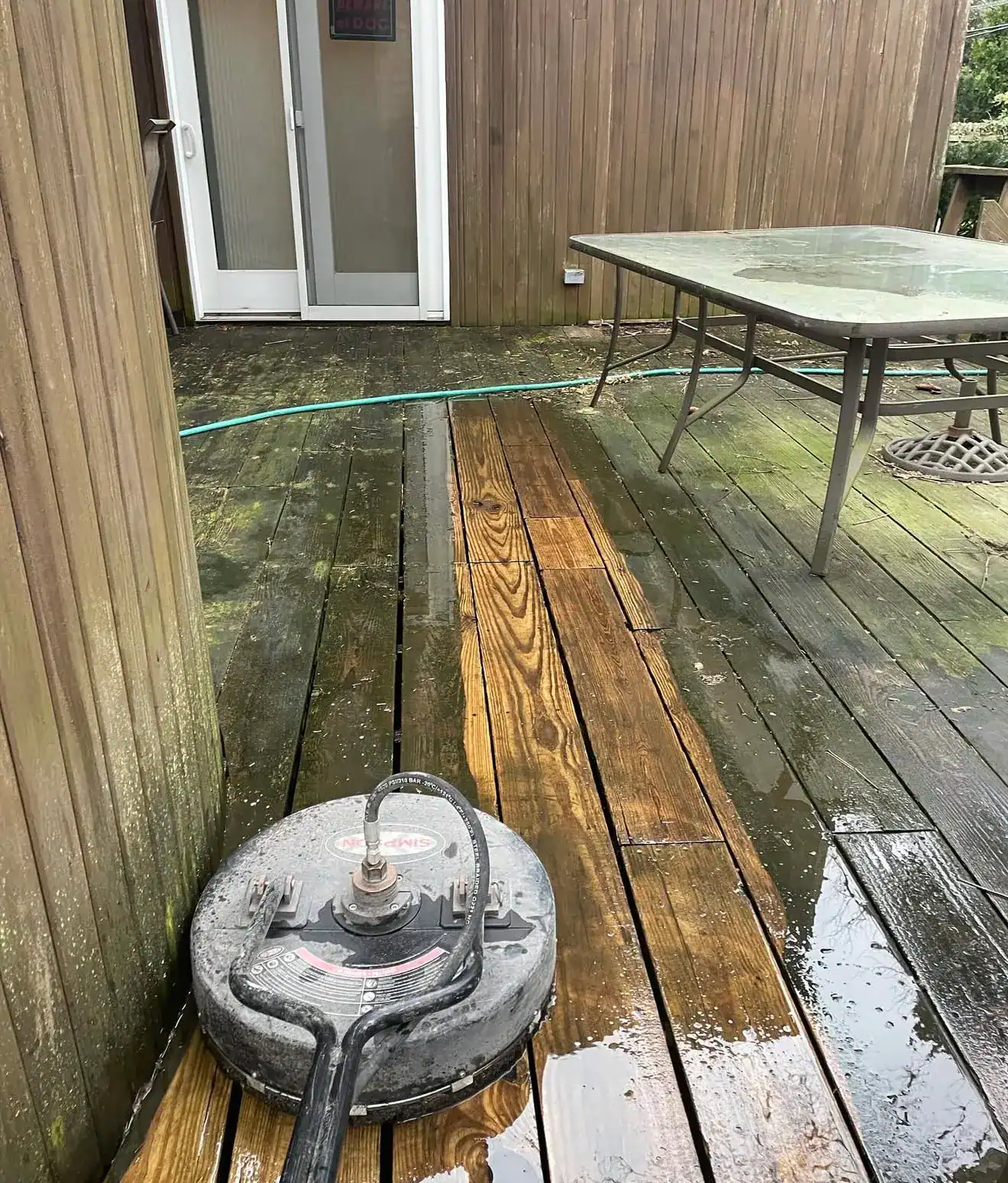
You spent a beautiful Saturday morning power washing your deck. By afternoon, you’re staring at splintered wood, gouged boards, and raised grain that wasn’t there this morning. Now you’re looking at repair bills that could hit $2,000 or more.
This happens to Nassau County homeowners every season. The pressure washer promised an easy clean. What you got instead was damaged wood, water infiltration, and the sinking feeling that you just made an expensive mistake. Here’s what actually causes deck damage from power washing and how to avoid becoming another cautionary tale.
The damage doesn’t come from power washing itself. It comes from using too much pressure on a surface that can’t handle it.
Wood is porous. It absorbs water, expands with humidity, and weakens over time from sun exposure. When you hit that surface with 2,500 PSI of water pressure, you’re not just cleaning it. You’re tearing apart the wood fibers, forcing water deep into the grain, and creating damage that shows up immediately or months later when rot sets in.
Most homeowners rent a power washer rated for concrete driveways and use it on their cedar deck. That’s like using a sledgehammer to hang a picture frame.
Walk barefoot across a deck that’s been power washed incorrectly and you’ll feel the splinters before you see them. This is the most visible type of power washing damage and one of the most common complaints from homeowners who tried DIY cleaning.
Splintering happens when water pressure exceeds what the wood can withstand. Softwoods like pine, cedar, and pressure-treated lumber start showing damage around 1,500 to 2,000 PSI. But most rental power washers operate between 2,500 and 3,100 PSI. You’re already over the safe limit before you pull the trigger.
The nozzle makes it worse. A zero-degree nozzle concentrates all that pressure into a pinpoint stream. It’s designed to strip paint and cut through concrete. When you use it on wood, it cuts grooves right into the deck boards. You’ll see parallel lines following wherever you moved the wand. Those aren’t clean marks—they’re permanent gouges.
Holding the wand too close amplifies the problem. Anything closer than 12 inches puts the full force of the water directly onto the wood surface. The fibers can’t handle it. They splinter, lift, and separate from the board. What looked like a dirty deck this morning now looks like it needs sanding, and in severe cases, board replacement.
Even if you use the right pressure, staying in one spot too long causes damage. Wood soaks up water as you spray. The longer you hold the stream on one area, the softer and more vulnerable that wood becomes. By the time you move to the next section, you’ve already created a depression or rough patch that didn’t exist before.
Older decks with existing wear are even more susceptible. If your deck already has small cracks, weathered spots, or areas where the finish has worn away, power washing will make those problems exponentially worse.
The damage you can see is frustrating. The damage you can’t see is dangerous.
High-pressure water doesn’t just clean the surface of your deck. It forces water deep into the wood grain, past any sealant or finish, and into areas that were never meant to stay wet. Once that water gets in, it doesn’t dry out quickly. In Nassau County’s humid climate, that trapped moisture becomes the perfect environment for rot and mold.
You won’t notice it right away. The deck looks clean after it dries. But underneath, the wood is retaining moisture. Over the next few weeks or months, that moisture breaks down the wood fibers from the inside. By the time you see soft spots or notice boards starting to sag, the rot has already spread to the joists and support structure.
This is where a $200 power washing job turns into a $2,000 repair project. Replacing deck boards is one thing. Replacing rotted joists, beams, or structural supports is another level of expense entirely. And it all started because water was forced into places it shouldn’t be.
Power washing can also drive water under your deck’s existing finish or sealant. If you have a stained or sealed deck, that protective layer is designed to sit on top of the wood and repel moisture. High pressure breaks that seal, lifts the edges, and allows water to get underneath. Now your sealant isn’t protecting anything—it’s trapping moisture against the wood.
The freeze-thaw cycle in New York winters makes water infiltration even more destructive. Water trapped in the wood expands when it freezes, creating cracks and splitting the fibers apart. By spring, you’re looking at boards that have split lengthwise, warped, or pulled away from the fasteners.
Composite decks aren’t immune either. While composite materials resist rot, they’re still vulnerable to water damage from improper power washing. High pressure can break the surface seal on composite boards, allowing moisture to penetrate the wood-plastic mixture. Many composite deck manufacturers will void your warranty if you use high-pressure washing.
Want live answers?
Connect with a CPR Power Washing expert for fast, friendly support.
Preventing deck damage starts with understanding that not all cleaning methods work for all surfaces. Your deck isn’t your driveway. It needs a different approach.
The key is using the right pressure, the right nozzle, the right distance, and in many cases, choosing soft washing over traditional power washing. We adjust our equipment based on what we’re cleaning, not just what removes dirt fastest.
If you’re determined to clean your deck yourself, you need to treat it like the investment it is. That means taking the time to do it correctly, even if it takes longer than you planned.
Start with the lowest pressure setting your equipment offers. For most wood decks, you want to stay between 500 and 1,200 PSI. Softwoods like cedar and pine need even less—closer to 500 to 800 PSI. Hardwoods like ipe or mahogany can handle up to 1,200 PSI, but there’s no reason to push it higher.
Use a wide-angle nozzle, typically 25 to 40 degrees. The white or green nozzle tips are your safest options. These spread the water pressure over a larger area, reducing the concentrated force that causes splintering and gouging. Never use a zero-degree or 15-degree nozzle on wood. Those are for stripping paint and cleaning concrete, not for deck maintenance.
Keep the nozzle at least 12 inches away from the deck surface. Some professionals recommend 16 inches or more for older or weathered wood. The farther you hold the wand from the surface, the more the water pressure dissipates before it hits the wood. This gives you effective cleaning without the destructive force.
Move in smooth, consistent strokes following the grain of the wood. Don’t spray across the grain—it lifts the fibers and creates a rough texture. Don’t stay in one spot trying to remove a stubborn stain—you’ll create a depression or gouge. Keep the wand moving at a steady pace, overlapping each pass slightly to ensure even coverage.
Test a small, inconspicuous area first. Pick a spot that’s not immediately visible, like under a bench or in a corner. Spray a section and let it dry completely. If you see raised grain, splintering, or any surface damage, reduce your pressure or switch to a wider nozzle before continuing. This test area could save you from damaging your entire deck.
If you’re cleaning a deck that already has a finish or sealant, be even more careful. High pressure will strip that protective layer right off, leaving you with bare wood that needs to be refinished.
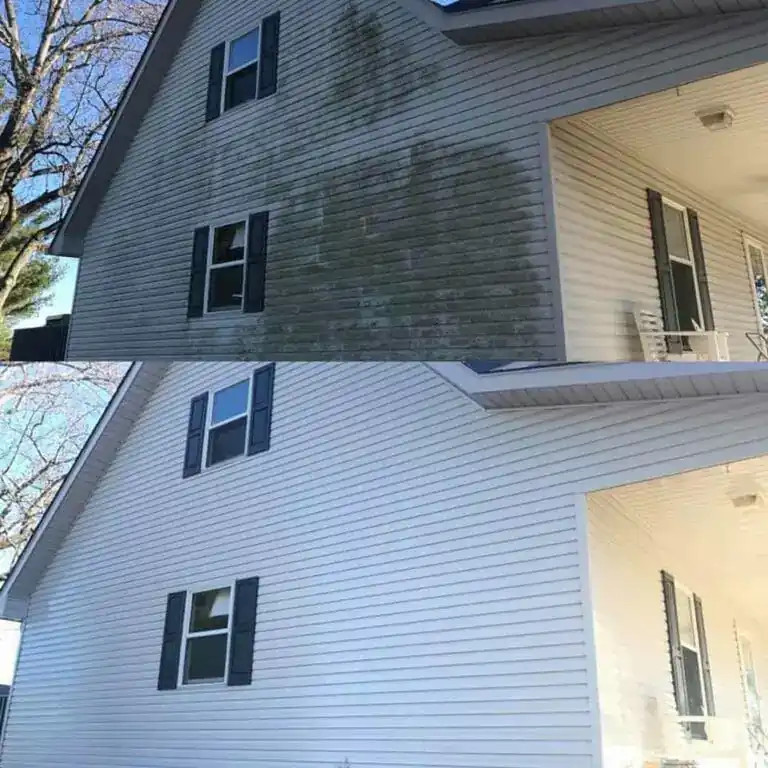
Sometimes the best way to prevent deck damage from power washing is to not power wash at all. Soft washing uses low pressure—usually under 500 PSI—combined with specialized cleaning solutions to break down dirt, mold, mildew, and organic growth without the destructive force of high-pressure water.
This method is particularly effective for decks in Nassau County, NY because of the coastal environment. Salt air, humidity, and shade from nearby trees create the perfect conditions for algae and mildew growth. Traditional power washing blasts that growth away, but it comes back quickly because you haven’t killed it—you’ve just removed it from the surface. Soft washing uses cleaning solutions that kill the organisms at the root, giving you longer-lasting results.
Gentle power washing also protects older decks that might not withstand high pressure. If your deck is more than 10 years old, shows signs of weathering, or has areas where the wood feels soft or spongy, soft washing is the safer choice. You get the deck clean without risking further damage to wood that’s already compromised.
Composite decks benefit from soft washing too. Most composite deck manufacturers specifically recommend against high-pressure washing because it can damage the surface and void warranties. Soft washing cleans composite materials effectively while preserving the protective outer layer that keeps the boards looking good and performing well.
The process involves applying a cleaning solution to the deck, letting it dwell for 10 to 15 minutes to break down contaminants, then rinsing with low-pressure water. The chemicals do the work, not the pressure. This approach is gentler on the wood, safer for surrounding plants and landscaping, and often more effective at removing organic stains than blasting them with high pressure.
If you have a painted or stained deck, soft washing prevents the finish from being stripped away. The low pressure cleans the surface without lifting the paint or sealant, which means you maintain the protection that finish provides. High-pressure washing would remove the finish entirely, forcing you into an unplanned refinishing project.
We use soft washing for most residential deck cleaning in Nassau County, NY because it delivers better results with less risk. We save high-pressure washing for concrete patios, driveways, and other hard surfaces that can handle the force.
Your deck is an investment in your home and your quality of life. It’s where you host summer barbecues, where your kids play, and where you relax after a long week. Damaging it with improper power washing turns that investment into a liability.
The difference between a clean deck and a damaged deck often comes down to knowing when to use the right method, the right pressure, and when to call in professionals who have the experience and equipment to do it correctly. As a licensed and insured company, we understand the risks, adjust our approach based on your deck’s material and condition, and take accountability if something goes wrong.
If you’re in Nassau County, NY and your deck needs cleaning, we can help you avoid the costly mistakes that damage wood, void warranties, and turn a simple cleaning into a major repair project.
Summary:
Share: