Professional pressure washing services and more across Long Island.
Contact Info
- Roslyn Heights, NY 11577
- Call: 516-353-8711
- Text: 516-353-8711
- 24/7 - 365 Days
Professional pressure washing services and more across Long Island.
Contact Info
Slippery driveways aren't just unsightly—they're dangerous. Discover how algae and moss create fall hazards and why professional driveway pressure washing is the safest solution.
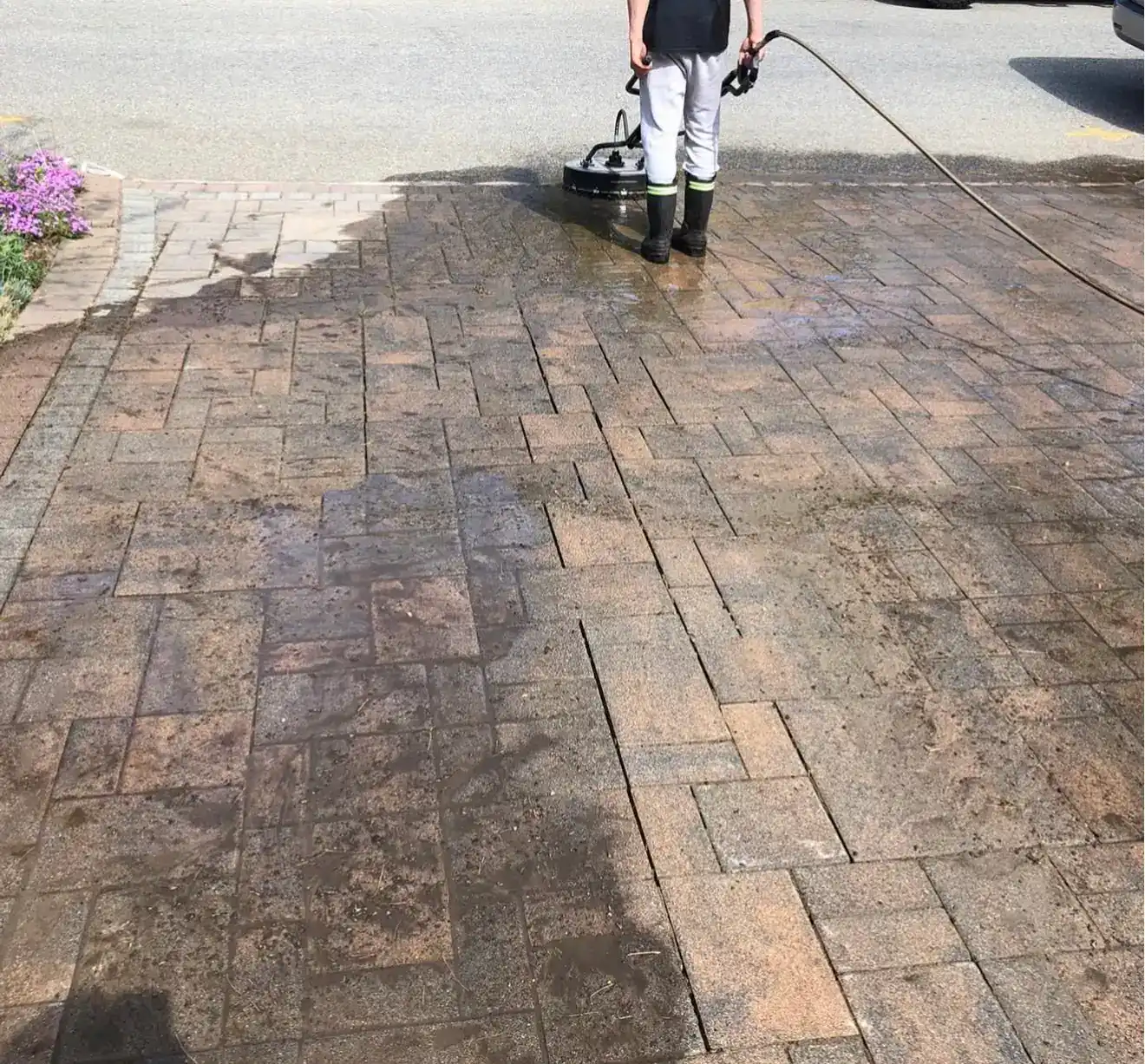
Algae doesn’t just sit on top of concrete. It anchors into the pores. Concrete looks solid, but under a microscope it’s full of tiny openings that hold moisture, dirt, and organic debris—everything algae needs to thrive. Once it moves in, it forms a biofilm on the surface that becomes incredibly slick when wet.
Moss does something different but equally problematic. It grows in cracks, along expansion joints, and where concrete meets soil. As it spreads, it holds even more moisture against the surface and works its way deeper into any existing damage.
Nassau County’s climate makes this worse. The humidity and salt air create perfect conditions for growth. Shaded driveways under trees stay damp longer, giving algae and moss exactly what they need to spread.

Falls aren’t minor inconveniences. According to the CDC, more than 14 million adults aged 65 and older experience falls each year, and falls are the leading cause of injury death in that age group. Outdoor surfaces covered in algae, mold, or moss rank among the most common environmental fall hazards.
For homeowners walking their driveways to check the mail, take out trash, or bring in groceries, a slippery driveway isn’t just an inconvenience—it’s a genuine safety risk that gets worse with every rain. The problem compounds in wet conditions. That thin layer of algae you barely notice on a dry day becomes treacherous the moment moisture hits it.
The risk isn’t limited to older adults. Kids running to the car after school, someone carrying packages, anyone distracted for a moment—all it takes is one slick patch. A fall on concrete can result in fractures, sprains, head trauma, or spinal injuries. Even minor falls can cause hidden injuries that require medical attention.
There’s also the liability concern. Property owners can be held responsible for maintaining safe walkways and warning visitors of hazards. If someone gets injured on your property because of a slippery driveway or patio you knew about but didn’t address, you could face medical expenses, legal claims, and rising insurance premiums. Courts hold homeowners accountable for premises negligence, and “I didn’t get around to it” isn’t a defense.
Beyond the physical and legal risks, there’s the stress of knowing your property isn’t safe. You shouldn’t have to warn guests to watch their step or worry every time it rains. Your driveway and patio should be functional, safe parts of your home, not hazards you navigate carefully.
Algae and moss aren’t random. They show up where conditions support them—and Long Island driveways check every box. Moisture is the biggest factor. Concrete is porous, meaning it absorbs and retains water. After rain or even morning dew, those tiny pores stay damp, creating the perfect environment for spores to land and start growing.
Shade accelerates the problem. Driveways under tree canopies or along the north side of homes don’t dry out as quickly. Direct sunlight naturally inhibits algae and moss growth, but shaded areas stay damp for hours or days longer. That’s why you’ll often see growth concentrated in specific sections rather than evenly distributed across the entire surface.
Organic debris plays a role too. Leaves, pollen, dirt, and other material settle onto concrete and break down over time. This decomposing matter provides nutrients that algae and moss need to thrive. In Nassau County, seasonal pollen and coastal humidity mean there’s a constant supply of both moisture and organic material.
Temperature matters as well. Algae thrives in warm, damp conditions. Nassau County’s climate—with humid summers and mild springs and falls—creates extended growing seasons. By the time you notice the green tinge or slippery texture, the growth has been establishing itself for weeks or months.
Once algae or moss takes hold, it spreads quickly. Spores are microscopic and airborne. They land on your driveway, settle into the pores, and begin multiplying as soon as moisture is present. Each rain event feeds the growth, and each dry period allows spores to disperse to new areas. Left unchecked, what starts as a small patch becomes a widespread problem that affects the entire surface.
The longer it sits, the harder it becomes to remove. Algae sends roots into the surface. Moss works into cracks and expansion joints. Both hold moisture against the concrete, which accelerates deterioration and creates even more favorable conditions for continued growth. It’s a cycle that only gets worse without intervention.
Want live answers?
Connect with a CPR Power Washing expert for fast, friendly support.
Pressure washing concrete doesn’t just rinse off surface dirt. It removes algae from deep within the concrete pores where it anchors and regrows. High-pressure water creates enough force to break the bond between contaminants and the material underneath, lifting away the biofilm and organic growth that garden hoses can’t touch.
The process works because of kinetic energy. Water traveling at high velocity strikes the surface with force that loosens particles of algae, moss, and embedded grime. The turbulence created when the spray hits the concrete spreads and swirls rapidly, dislodging debris from textured surfaces and flushing it away.
Professional equipment makes the difference. Commercial-grade pressure washers deliver the right combination of pressure and water flow to clean effectively without damaging the surface. Different nozzles and pressure settings allow our technicians to adjust the approach based on the material—what works for concrete might be too aggressive for pavers or natural stone.
A garden hose won’t fix a slippery driveway. It doesn’t generate enough pressure to reach into the pores where algae anchors itself. You might rinse away loose dirt, but the biofilm and embedded growth stay put. Within days or weeks, the problem returns because you never actually removed the source.
Scrubbing by hand is exhausting and largely ineffective. You can spend an entire Saturday on your hands and knees with a brush and bucket, and the results will be minimal. Algae grips concrete at a microscopic level. Manual scrubbing can’t generate the force needed to break that bond across an entire driveway. Even if you manage to clean one section, the physical effort required to do the whole surface is unrealistic for most homeowners.
Renting a pressure washer seems like a solution, but it comes with risks. Without experience, it’s easy to use too much pressure or the wrong nozzle, which can damage concrete, create pitting, or cause surface erosion. Pressure washers are powerful tools, and improper technique can make things worse. There’s also the safety concern—the high-pressure stream can cause serious injury if mishandled.
Chemical treatments available at hardware stores often promise easy results, but they’re hit or miss. Some products work temporarily but don’t prevent regrowth. Others contain harsh chemicals that can harm surrounding landscaping, pets, or groundwater. And even when chemicals kill the algae, you still need to remove the dead material, which brings you back to needing proper equipment and technique.
The real issue with DIY approaches is that they address symptoms without solving the underlying problem. Algae and moss return because the conditions that allowed them to grow in the first place haven’t changed. Professional driveway cleaning in Glen Head removes the growth completely, including the spores and roots embedded in the surface. That thoroughness is what prevents rapid regrowth and restores actual traction.
Time is another factor. What takes a professional crew a few hours could consume your entire weekend—and that’s assuming you have the right equipment and know how to use it safely. Most homeowners would rather spend that time enjoying their outdoor spaces than battling algae with inadequate tools.
Professional patio cleaning services start with assessment. We evaluate the surface material, the extent of algae or moss growth, and any existing damage that needs special attention. This determines the appropriate pressure settings, nozzles, and cleaning solutions to use. Not all concrete is the same, and different conditions require different approaches.
Pre-treatment is often the first step. For heavy algae buildup, applying a cleaning solution before pressure washing helps break down the biofilm and loosen embedded growth. These solutions are typically biodegradable and safe for surrounding landscaping when used correctly. The dwell time allows the product to penetrate the pores and begin working before the high-pressure rinse.
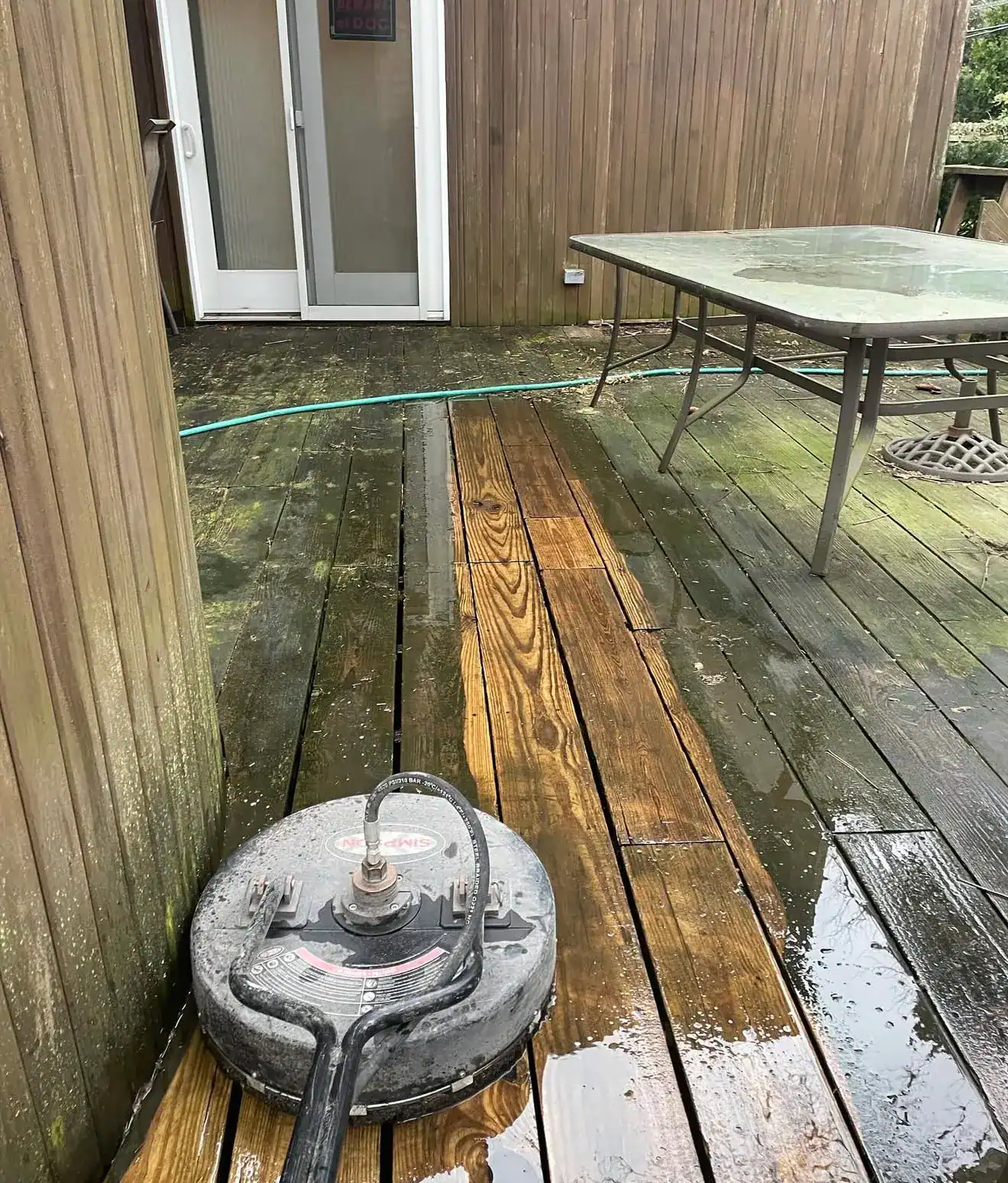
The actual pressure washing uses commercial equipment that delivers consistent, controlled water pressure. We use surface cleaners—rotating heads that distribute pressure evenly across the concrete—rather than just a wand. This creates uniform results and prevents the striping or etching that can happen with improper technique. The equipment also captures and directs the runoff, managing the mess and protecting nearby areas.
Technique matters as much as equipment. Our experienced technicians know how to angle the spray, maintain the right distance from the surface, and work in overlapping passes to ensure complete coverage. We adjust pressure based on what we’re cleaning—higher for heavily soiled concrete, lower for areas with existing cracks or delicate materials nearby.
Post-treatment options can extend the results. After cleaning, we can apply sealants or inhibitors that slow regrowth by creating a barrier on the concrete surface. These aren’t always necessary, but in shaded areas or homes with persistent moisture issues, they can make a noticeable difference in how long the driveway and patio stay clean.
The entire process typically takes a few hours for an average driveway and patio, depending on size and condition. The difference is immediate—surfaces that were dark, slimy, and slick become clean, bright, and textured again. More importantly, the traction returns. Walking on a freshly cleaned driveway feels completely different because the grip has been restored.
Professional patio cleaning services also identify other issues. While working, our technicians often spot cracks, settling, drainage problems, or areas where repairs might be needed soon. This gives homeowners a chance to address small issues before they become expensive problems. It’s one of the benefits of having experienced eyes on your property rather than just renting equipment and hoping for the best.
Slippery driveways and patios aren’t something you should live with or work around. They’re fixable safety hazards that get worse the longer you ignore them. Professional pressure washing removes the algae and moss that rob concrete of its traction, restoring the surface to a safe, functional condition.
This isn’t about curb appeal, though that’s a nice side effect. It’s about making sure your family and visitors can walk to the front door without worrying about falling. It’s about eliminating a liability before it becomes a medical bill or insurance claim. And it’s about maintaining your property so it lasts longer and performs the way it should.
If your driveway feels slick when wet or you’ve noticed that green tinge spreading across the concrete, it’s time to address it. We serve Nassau County homeowners with professional driveway cleaning in Glen Cove and patio cleaning that prioritizes safety and results. Licensed, insured, and equipped to handle the job right the first time.
Summary:
Share: