Professional pressure washing services and more across Long Island.
Contact Info
- Roslyn Heights, NY 11577
- Call: 516-353-8711
- Text: 516-353-8711
- 24/7 - 365 Days
Professional pressure washing services and more across Long Island.
Contact Info
Long Island winters are hard on outdoor furniture. Here's why shrink wrapping is the most effective way to protect what you've invested in your backyard.
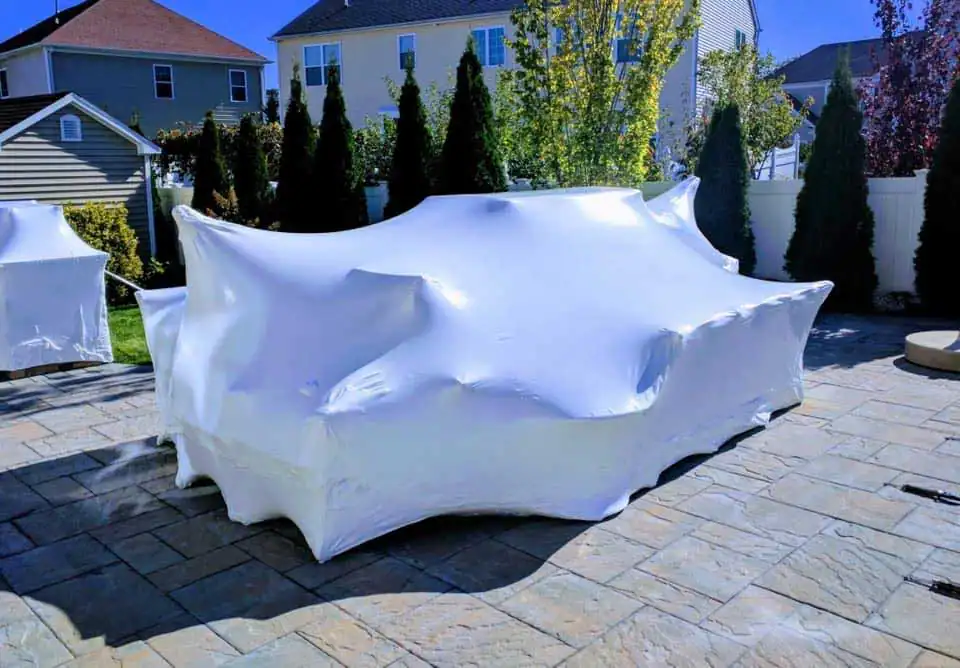
Every fall, Long Island homeowners face the same problem: a backyard full of furniture, grills, fire pits, and outdoor kitchens that aren’t going anywhere — and a winter that absolutely is. The garage is full. The storage unit isn’t worth the hassle. And those covers from the hardware store? They’ll be halfway across the yard by January.
Shrink wrapping solves this in a way nothing else really does. This post covers what the process actually involves, why it works better than the alternatives, and what questions most homeowners have before they book. By the end, you’ll have a clear picture of whether it’s the right call for your backyard.
Shrink wrapping for residential outdoor use is exactly what it sounds like — a professional-grade polyethylene film is stretched over your outdoor furniture, grills, fire pits, or AC units, then heat-sealed with a heat gun until it contracts into a tight, custom-fitted barrier. No loose edges. No gaps. No flapping in the wind.
The technology comes from the marine industry, where it’s been used for decades to protect boats through winter storage. The same logic applies to your backyard. If it works well enough to protect a vessel sitting outside through a nor’easter, it handles a patio sectional just fine.
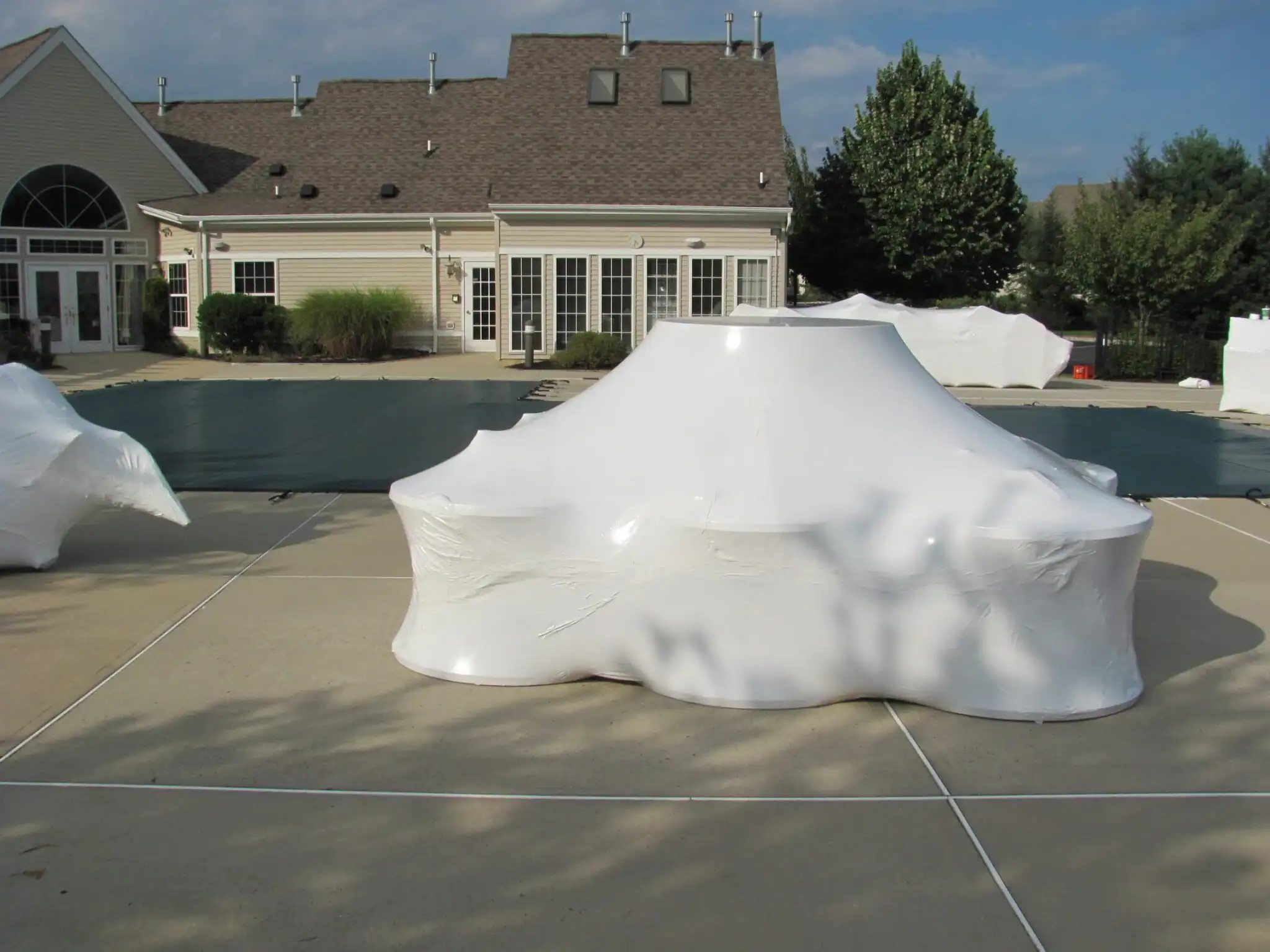
More than most people expect. The obvious ones are patio furniture sets — dining tables and chairs, sectionals, lounge chairs, cushion stacks, and umbrellas. But the list extends to outdoor kitchens, built-in grills, fire pits, and freestanding BBQs. If it lives in your backyard and costs real money to replace, it’s a candidate.
Window AC units are another one that surprises people. A large portion of homes in Nassau County and throughout Suffolk County were built before central air was standard, which means window units are still the norm. Rather than wrestling a heavy unit out of the window every October and hauling it to the basement, shrink wrapping it in place is a practical alternative — sealed, protected, and ready to go when warm weather returns.
The items that don’t make sense to wrap are generally things that need to be stored for other reasons — plants, anything with fuel, items that require winterization beyond weather protection. For everything else, if it’s staying outside, it can be wrapped.
One thing worth noting: what we do at CPR Power Washing is strictly residential. We’re not wrapping boats, RVs, or commercial equipment. The focus is entirely on homeowners and their backyard spaces — which means the process, the materials, and the approach are all calibrated for exactly that kind of job.
The process starts before a single sheet of plastic comes out. Furniture should be clean and completely dry before it’s wrapped — this is a step that gets skipped more often than it should. Wrapping dirty furniture traps whatever’s on the surface — mold spores, salt deposits, organic debris — against the material for five or six months straight. When the wrap comes off in spring, that trapped grime has been working against your furniture the entire time. It’s one of the reasons we pair shrink wrapping in Old Westbury with power washing. Clean first, then seal.
Once everything is prepped, the film goes on. We use 7 Mil marine-grade polyethylene shrink film — a professional-grade thickness that holds up through sustained wind, heavy wet snow, and the kind of freeze-thaw cycling Long Island winters deliver regularly. Consumer-grade films available at hardware stores typically run 3 to 4 Mil. That’s a meaningful difference when a nor’easter rolls through with 50-mile-per-hour gusts.
Sharp corners and protruding hardware get padded before the film goes on, which prevents punctures. The film is then heat-sealed using a heat gun, shrinking it down to a drum-tight finish with no loose material. After that, ventilation ports are installed — and this part matters. A fully sealed, unvented wrap traps condensation inside as temperatures fluctuate. That moisture has nowhere to go, and mold follows. The vents allow air to circulate while keeping rain, snow, and wind out. It’s the difference between a wrap that protects your furniture and one that quietly damages it.
The finished result is tight, clean, and built to last through the full Long Island winter without attention.
Want live answers?
Connect with a CPR Power Washing expert for fast, friendly support.
The two most common alternatives are furniture covers and tarps. Both have real limitations that most homeowners have already discovered the hard way. Covers blow off in wind, pool water on flat surfaces, and leave enough gaps at the edges for mice and insects to find their way in. Tarps are worse — they flap, tear, fill with standing water, and rarely make it through a full Long Island winter intact.
Shrink wrap is a fundamentally different product. It’s heat-sealed to the specific shape of whatever it’s covering, which means there are no loose edges, no pooling points, and no entry gaps. It doesn’t blow off. It doesn’t collapse under snow load. It holds its form through the same conditions that destroy the alternatives.
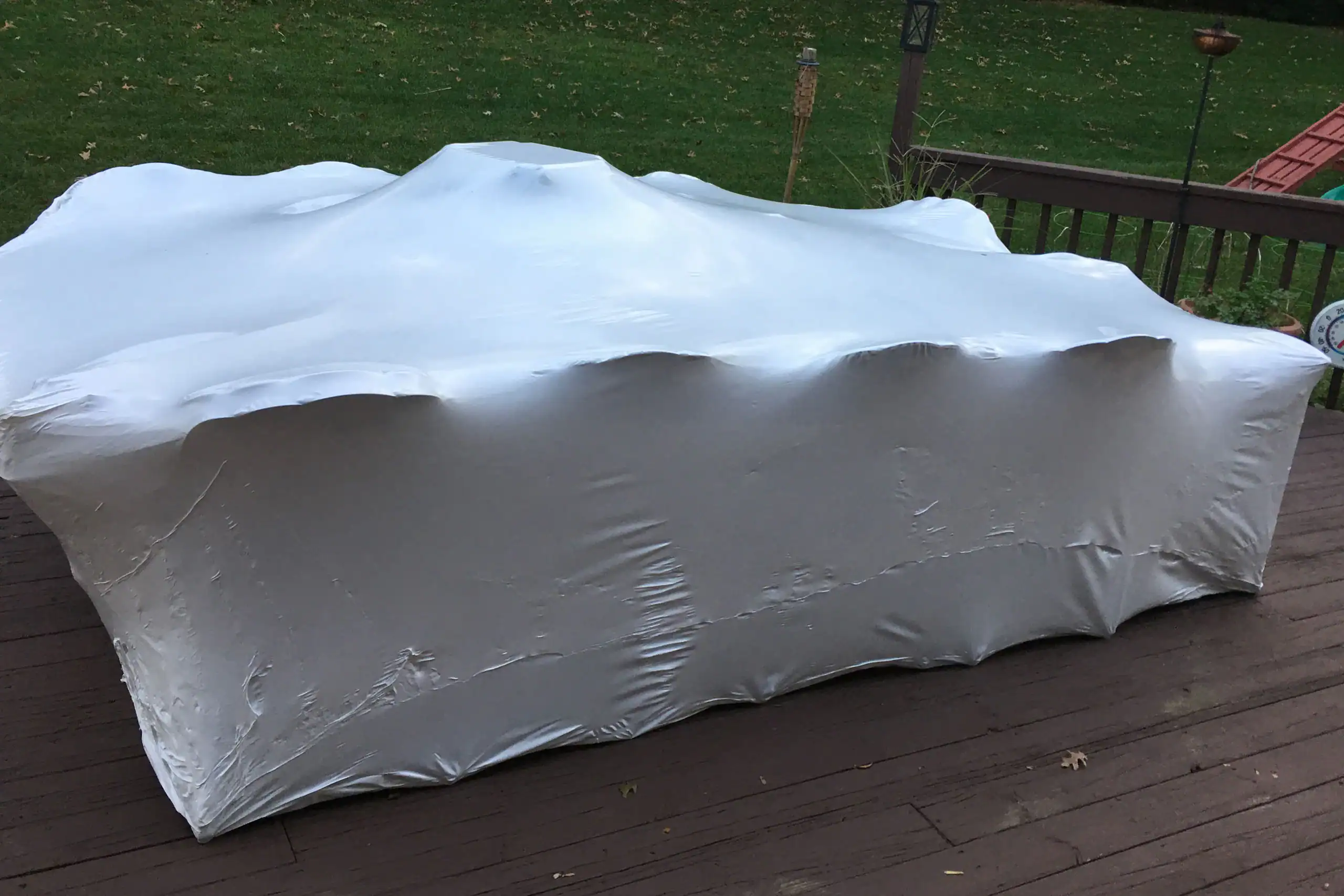
That depends on what you paid for your outdoor furniture — and what it would cost to replace it. A quality patio sectional on Long Island runs anywhere from $2,000 to $8,000 or more. An outdoor kitchen setup can easily exceed that. Professional shrink wrapping in Mineola costs a small fraction of either number. The math isn’t complicated.
What makes it particularly relevant here is the environment. Long Island’s proximity to the water means salt air is a constant factor, especially on the North Shore and South Shore. Salt is corrosive to metal frames, hardware, and finishes in a way that inland markets simply don’t experience at the same level. Add the humidity, the freeze-thaw cycles, and the occasional nor’easter that comes through between November and March, and outdoor furniture on Long Island takes a harder beating than it would almost anywhere else in the region.
The other piece of the cost equation is the furniture’s lifespan. Teak and hardwood pieces that are properly protected can last years longer than those left exposed or loosely covered. Cushions that stay sealed and dry through winter come out in spring looking the same as they went in. Furniture that gets wet, freezes, thaws, and gets wet again — repeatedly — shows it.
For homeowners in Suffolk County and Nassau County who’ve already spent real money on their outdoor spaces, protection isn’t a luxury. It’s just maintenance. The question isn’t really whether it’s worth it. It’s whether you want to find out what it costs to replace things instead.
The question we hear most often is whether moisture will get trapped inside and cause mold. It’s a fair concern — and the honest answer is that it can happen with a poorly installed wrap. An unvented, fully sealed wrap traps condensation as temperatures swing up and down through winter. That’s why every wrap we install includes ventilation ports. Air circulates, condensation doesn’t build up, and the furniture stays dry. The risk is real with DIY or low-quality applications. With a properly vented professional wrap, it’s not.
People also ask whether they need to move their furniture before we arrive. In most cases, no. One of the practical advantages of shrink wrapping Manhasset is that it works in place. Your sectional stays on the patio. Your outdoor kitchen stays where it’s built. We work around the layout of your backyard rather than requiring you to rearrange it. For homeowners throughout Suffolk County and Nassau County — where outdoor spaces are often designed around specific layouts — this matters.
Another common one: when should you book? The window is roughly mid-October through mid-November, before the first hard freeze. Once temperatures drop consistently below freezing, working conditions for heat gun application become less ideal, and furniture surfaces may already be holding moisture you don’t want sealed in. Earlier in the fall is better. The same logic applies in reverse for spring — wraps typically come off in March or April, which is also a natural time to schedule a power wash of the furniture before the outdoor season starts.
Finally, homeowners ask about what happens if the wrap gets punctured or damaged during the winter. A small tear in a properly installed 7 Mil wrap doesn’t typically compromise the whole job — the material is thick enough that minor damage doesn’t cascade. But if something significant happens, it’s worth a call. We’re local, we’re accessible, and we’d rather address something mid-season than have you discover a problem in spring.
The window between late summer and the first hard freeze goes faster than it feels like it will. Once the temperatures drop and the nor’easters start queuing up, the options narrow. Shrink wrapping done right — with the right materials, proper venting, and clean furniture underneath — keeps your outdoor investment exactly where you left it, ready to use when the weather turns back around.
We handle the full cycle: power washing your furniture and outdoor surfaces before the season ends, addressing any masonry issues we spot along the way, and wrapping everything that needs protection before winter sets in. One company, one call, one less thing to manage.
If you’re in Suffolk County or Nassau County and want to get your backyard squared away before the cold arrives, reach out to us and we’ll take it from there.
Summary:
Share: